26 November 2004

A Won Unseen in Years


Won to Dollar exchange rate (From PACIFIC Exchange Rate Service, Copwrite 2004 by Prof. Werner Antweiler, University of British Columbia, Vancouver BC, Canada) Posted by Hello

24 November 2004

Anthracite, Vinalon, and Economic Ramblings


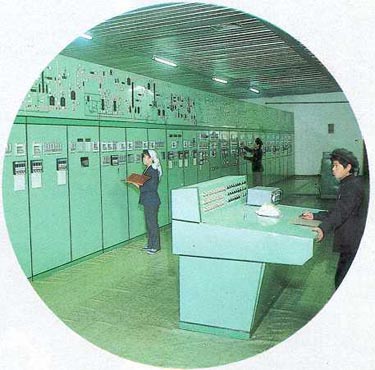
Sunchon Vinalon Control Room (from Korea Today, August 1998) Posted by Hello


So in a somewhat ironic twist of fate, North Korea is apparently assisting China in addressing the growing energy shortage in… China. Yes, the Hermit Kingdom is bailing out the Middle Kingdom by sending some 1.18 million tons of anthracite to China in the first nine months of 2004, according to the Korea Trade-Investment Promotion Agency (KOTRA). For the same period in 2003, Pyongyang exported some 537 thousand tons, up from around 268 thousand tons in 2002.

But before we wonder if Pyongyang has fully forgiven Beijing for all those times China cut off oil shipments to North Korea in order to keep the little brother in line, we should note that Pyongyang is by no means doing this out of the goodness of its own heart. During the first nine months of 2003, North Korea earned some $10.8 million from anthracite sales to China, up from just under $5 million for the first nine months of 2002. But for the same period in 2004, that rose to some $34.7 million, an increase of 220.8 percent.

So North Korea, which continues to instigate assorted nuclear crises in order to garner energy assistance from its neighbors and the United States, is now making some quick hard cash off of China, which has long given oil to Pyongyang as aid.

Ironic.

But my question is – what affect does this have on the North Korean clothing industry? After all, the Juche fabric Vinalon is made from anthracite. And without the wonderful coal-based cloth, where will Kim Jong Il get is swell brown jumpsuits? (NKChosun on Vinalon, NIS on Vinalon, CNS on Vinalon)

On a more serious note, it is interesting to see the shifts and flows of trade in the region and particularly between North Korea and China. Pyongyang has apparently dropped its plans for the Sinuiju Special Economic Zone (or Special Administrative Region), a decision that Beijing no doubt was quite thrilled to hear (after all, Beijing went so far as to arrest Yang Bin to avoid letting the Sinuiju project ever get off the ground). Instead, North Korea is putting all its attention on Kaesong, with whatever remaining thoughts going to the Kumgang project.

The shifts and moves in North Korea’s economic restructuring are already showing affects, not only on the domestic pricing of commodities, but also on the rumored signs of growing unrest (a word that seems too extreme; perhaps disgruntled-ness is better?) in the country and the renewed interest by the regime in vilifying foreign media influences.

Pyongyang is intimately aware of the tremors in the social fabric of the nation, and thus the nuclear crisis, which is supposed to result in a security arrangement that pre-empts foreign powers (read United States) from interfering with or taking advantage of social instability to bring down the regime. And ultimately, for Kim Jong Il, regime survival requires economic alterations, and he will continue to walk the tenuous path balancing the dangers of inaction with the dangers of action.

18 November 2004

The Missing Kim?


Kim the Elder and Kim the Younger Posted by Hello


Rumors and counter-rumors are flying around about the mysterious disappearance of images of Kim Jong Il’s pictures from public places in North Korea amid unconfirmed (and even contradicted) reports that North Korean media has dropped the “Dear Leader” epitaph when referring to the son of the “Great Leader” and president in perpetuity Kim Il Sung.

The initial rumors appear to have started when some “top ranking diplomat” told ITAR TASS that the portraits of Kim had apparently been removed from public places.

A light rectangular spot and a nail in the wall were the only things that remained in the place where Kim Jong Il's portrait used to be, he said.

From there, the story spread, with reporters in Russia, South Korea and Japan all jumping on the bandwagon, contacting sources and sources of sources to confirm, deny or basically fail to contribute anything to the general question of whether – and why – Kim’s portraits may have been removed.

Then, Japanese media reported that Kim was no longer referred to as “Dear Leader” in the North Korean media, a charge that was refuted by South Korea’s Yonhap news agency. Amid all the hubbub, Kim visited KPA unit 754, apparently oblivious to all the fuss over his pictures.

The conflicting reports have triggered a wave of speculation, from (perhaps wishful?) rumors of a military coup to a semi-organized public disobedience campaign to a serious illness to preparations to replace Kim’s photo with that of his successor. The only thing not thrown out is that Kim may have decided to change his hairstyle, and perhaps wanted the portraits to match the new do…

My view is that the selective removal of the portraits may be part of a broader PR campaign; first to shift the loyalty and attention from Kim to North Korea, and second to prepare for the eventual grooming of a successor – one who isn’t his son. (of course, I have no idea why they would leave the place looking like the Grinch had come through on Christmas eve – “On their walls he left nothing but hooks and some wire.”)

Kim was already known to be modest (OK, maybe not known for it, but reportedly he was somewhat modest, not too keen on his own appearance, a little self-conscious). Removing his portrait is simply a way of making himself look more like one of the guys, something his late father managed to do quite naturally, being a former guerrilla leader and constantly visiting the common man (something Kim seems less than comfortable doing, I mean, when was the last time you saw a picture of the younger Kim sitting on a mat outside chatting with the peasants, or walking down a snow-covered path surrounded by school kids in their bright red scarves?).

Instead, Kim junior seems aloof, distant and, to put it bluntly, socially inept. Just look at his meeting with Albright when she visited. He took her to a mass gymnastics display, and showed her pictures of his model rocket (which did manage to fly over Japan). Kim could now be seeking a slightly different approach to reaching the people – forget about the “cult of personality,” at least love the country – and stop the incessant defections to the South.

But Kim may also be building toward a subtle mindset change among the North Korean people themselves. Having his and his father’s portraits together leaves the impression that dynastic succession is the norm in the Democratic People’s Republic of Korea. But none of Kim’s sons really seem all that qualified for leadership, particularly not the Disney World visiting Kim Jong Nam. So Kim may be simply paving the way for a shift I understanding, one where the next leader may well be based solely on merit, rather than relying on the added bonus of nepotism. If so, North Korean politics could get real interesting in the coming years, as younger cadre compete for the attention of the Dear Leader (if that is what they are still calling him), and older cadre try to get their sons in line for the top job.

10 November 2004

Krispy Kreme Coming to Korea?!

OK, so Koreans have been on a “well being” kick lately, all complaining about how fat the kids are becoming from just eating burgers and pizza and the like and skipping the traditional rice and kimchi. Well Lotte appears to be none-to-concerned with the whole well being trend, as seen in the Nov. 9 Chosun Ilbo.

Holding a press conference at Lotte Hotel Tuesday, Lotte disclosed, “We made a business contract with Krispy Kreme Doughnuts and are to open the first shop in Shinchon, Seoul next month.” Executive Officer Kim Moo-hong of Lotte Shopping’s Krispy Kreme Doughnuts business stated, “We will open more than 25 directly managed branches in the next five years.”


Somewhat humorously, for me at least, is the added note:

Reflecting the recent "well-being" fever, the company plans to serve sugar free donuts and low calorie donuts from next year.


By my standards, Krispy Kreme donuts are pretty awful. They are so soaked in sugar that they are soggy – give me a good old Dunkin Donut any day. Back in 1996, while I was living in Kwangju, the nearest donut shop was in Itaewon in Seoul. There was a Dunkin Donuts there. Then in the basement of the Sinsagae department store, an unnamed donut and coffee stand opened, and we were there every Sunday morning for coffee and donuts… at least until it closed after like three months. At the time, I guess the folks down in Kwangju weren’t quite ready for donuts.

When I was back there earlier this year, there were plenty of donut shops around (according to the Chosun Ilbo article, the Korean donut market now stands at some $45 million, of which 80 to 90 percent is owned by Dunkin Donuts).

And as for Krispy Kreme’s reasons for entering the Korean market?

“Judging that the growth rate of the Korean market was great, Korea is the first Asian nation we've entered,” said an marketing manager at the headquarters of Krispy Kreme Doughnuts. He added, “With the Korean market as a foothold, we’re planning to make inroads into the whole Asian region.” It is assumed 80 to 90 percent of the W50 billion worth Korean donut market is occupied by Dunkin Donuts.


Enjoy your donuts!

06 November 2004

The Immortal Yi Sun Shin

For those who haven't seen it yet, a good watch is the KBS series The Immortal Yi Sun Shin. If you can read or understand Korean, you can see bits of it on the "Bulmyuleui Lee Soon Shin" site on KBS. There is also an English-language discussion board over at KBC TV 28 Fan Club site. For a quick bio of the late Admiral, check out The Life of Admiral Yi Sun Shin, and see here for a page of maps and pictures of and related to Adm. Yi. For more information on Korean movies and dramas (all the rage these days) see Darcy Paquet's KoreanFilm.org.

03 November 2004

South Korea - Nervously Eyeing U.S. Elections


Cartoon from the Chosun Ilbo, likening the severe partisanship in the United States this election cycle to the frequent political situation in Korea. Posted by Hello

During the 2000 election, I was given strict orders by my Mother-in-Law to vote for Gore, and not for “Bushie.” At the time, many Koreans (particularly those from Cholla) were concerned about the prospects of a Bush win, and when Bush did win, and instantly took a hard-line stance on North Korea, they felt vindicated in their concerns. The perceived unilateralism of the Bush administration in the wake of the Sept. 11 attacks only solidified this view. And the rapid decision to reduce and relocate U.S. forces in Korea compounded the level of concern with Bush (even if anyone who was observant knew a U.S. force restructuring was long in coming).

So heading into the 2004 election, it was a no-brainer that the advice would once again be to vote against Bush. Heck, during a visit to Kwangju earlier this year for the May 18 memorials, they even had a George Bush in a cage that kids could throw beanbags at and adults could poke with a stick.

But all that was before the Presidential debates, and Kerry’s two key comments. First, Kerry said one of his top priorities would be counter-proliferation – and he pointed to North Korea, which he said acquired nuclear weapons while Bush was distracted in Iraq. Second, he said that Washington would restart bilateral talks with North Korea, rather than outsourcing to China. Now, fact checking aside, these comments raised some eyebrows in Seoul.

In essence, Kerry, who was initially seen as someone who would be more likely to follow along with the “Sunshine Policy” and “Policy of Peace and Prosperity,” was now seen as someone who would quite likely take an even tougher approach on North Korea than Bush. At least the core of Bush’s policy was to ignore Pyongyang’s toothless growls; Kerry may well need to demonstrate his strength and resolve and make an example of North Korea in his quest to battle proliferation of nuclear materials, other potential WMD, and delivery systems like missiles.

But even if he decided NOT to take action against Pyongyang (by choice or advice), Kerry’s other comment, that on bilateral talks, is just as troubling. Seoul fought long and hard to be included in the decisions and paths toward dealing with its Northern neighbor, and while no one believes the six-party talks are the best thing out there, they at least give Seoul an influential place at the table. If Kerry reverts to a bilateral approach, Seoul is left out in the cold once again, with little leverage.

So now Korea is conflicted. The results of the U.S. presidential election – at least in the polls – are too close to call. Both the ruling and opposition parties are preparing contingencies for whomever wins, and both sides are apparently as split as they are from each other over who the best candidate is for Korea (even if it IS a U.S. election, and the Koreans themselves have little involvement or influence). For South Korea, the U.S. elections will impact economic, political and security cooperation – and potentially confrontation – with Washington.

And sitting impotent at the other side of the world leaves them even more frustrated and insecure than usual.

02 November 2004

Movies or Money (Theatre or Trade?)

Article in the Chosun Ilbo Nov. 1:
U.S. ambassador to Korea Christopher Hill said at a lecture on the roadmap to a free trade agreement (FTA) at Korea University on Monday that the Korean government and people had to choose between an FTA and Korea's screen quota system. Ambassador Hill said the U.S. considered Korea’s screen quota system devoting 40 percent of annual screening time at movie theaters to local movies unnecessary when the Korean movie industry was booming. Korea could not have the screen quota system and FTA at the same time, said the ambassador.


As South Korea works towards FTAs all over the place (Singapore, Chile…) Washington is holding up Korea’s notorious screen quota as a stumbling block (like Hollywood is having trouble making money…). South Korean cinema – movies, television shows – has been catching on around Asia, the so-called Korean Wave effect (see the Korean Culture and Contents Agency for a full dose of Koreanistic stuff) . But Korean movies are barely making a dent in the U.S. market (heck, I just finally saw “Attack the Gas Station” make it into the local Blockbuster, before that, it was only Shiri and 301/302, the latter of which is not exactly what I consider the crowning achievement in recent Korean cinema (though there is a case to be made for Gas Station…).

Interestingly, while Korean flicks did wonderful at the domestic box office in recent years (eight of the top ten best selling films of 2003, five of the top ten best selling films in 2002, six of the ten best selling in 2001, and five of the ten best selling in 2000), this year, as of mid-October, Korean films took only four of the top ten best selling film spots in Korea (See KoreanFilm.org 2004 Report). Forty percent of the positions. Hmmm, didn’t Hill say forty percent reserved for domestic films was too high?

Korean films were particularly great in recent years, rising up in 1999 and moving through last year, but there has been another slowing in the movies put out there, and they are unable to compete well with American and other foreign films. While I am no big supporter of the quota system, the idea that Hollywood needs Washington to go to bat for it in the Korean market seems somewhat ludicrous. American films will always be popular in Korea, and most other countries in the world, for that matter, and the intervention of American politicians seems a little excessive and somewhat culturally imperialistic (maybe the North Koreans are right on that one).

Free trade and open markets is nice, but there should be some support for domestic industries and culture – let Koreans shape Korean pop-culture. And anyway, Hollywood movies are always available near any subway stop or open-air market in Korea for like two bucks. Now there is free enterprise and trade…