31 May 2005

Peace or Victory?


 Posted by Hello
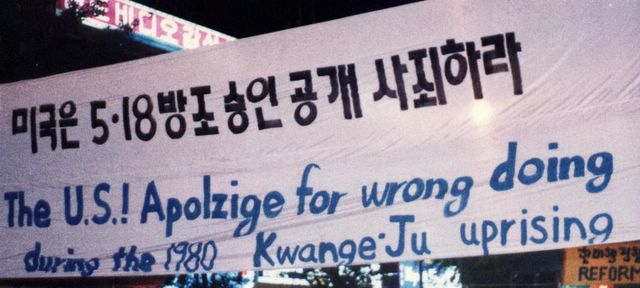
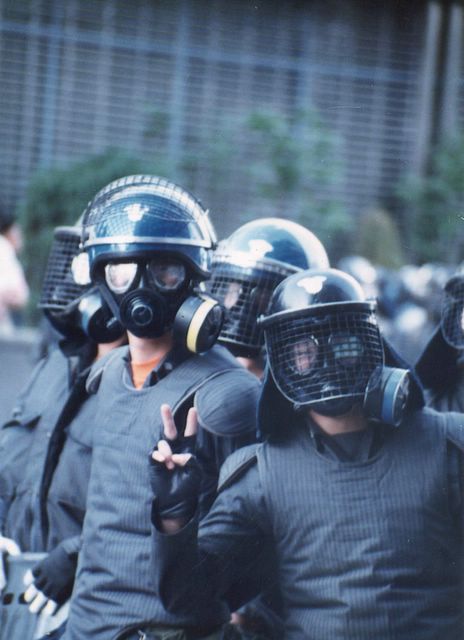
One of my favorite demo pics. This was taken in Kwangju in 1996. Moments after I shot this one, the taller guy beaned the shorter one upside the head. I used to use this picture in my classes to show the difference in perception of hand gestures, and the apparent irony in this picture for American audiences.

27 May 2005

Book Report Time

As the Bush administration leaks information about key officials reading up on North Korea, I thought it a good time to offer some insights into books on the subject. Thus I will begin with Bruce Cumings’ recent book North Korea. (Cumings, Bruce. North Korea. New York: The New Press, 2003.)

I welcome any and all comments on this or other books on Korea or Korean issues (or Asian issues in general). This is not a scholarly type of review, nor any attempt to do anything other than encourage folks to read all sorts of different books of all different perspectives. The views expressed this review are mine, and not related to any organization or entity I may or may not be affiliated with.

Bruce Cumings’ North Korea begins like a rant against the Bush administration from a North Korean apologist. This is not to say the book isn’t useful, but that the tone and style, particularly in the first two chapters, is one that, in its attempt to show how the North Koreans view the world, comes across as an unadulterated attack against Bush and all those who think North Korea is a threat.

This is a pity, because the very individuals who may be best served by this education and information will be rapidly turned off by the beginning of the book. And however far they read, that impression will linger. I recommend readers begin with Chapter three, read through the end of the book, and then come back to the first two chapters.

Overall, the book only presents a little new information, but in consolidating it into a single volume focused on the North Korean societal mindset, it is a useful addition to a collection of works on North Korea. Something particularly useful about the book is its attempt to view North Korea first and foremost as a Korean and Asian state, not as a Marxist or Leninist society. Cumings himself points out the problem with the latter approach, and I have personally encountered it several times in other publications, government and think-tank statements and in interactions with political and defense officials (some even in South Korea).

There is a lingering impression of North Korea, built primarily from the study of Soviet bloc nations and exaggerated (if not completely fabricated) intelligence and information from South Korean, American and Japanese intelligence and defense officials, usually with the intent of vilifying the North to justify the actions of the existing regime or policies in the originating state.

U.S. military officers in Korea, for example, subconsciously dread the idea of diplomatic relations with the North, as it would remove their very reason for their long careers on the Peninsula. And the former South Korean governments created their own myths and exaggerations of the evils of North Korea to justify their continued autocratic and military rule of the South.

The impression and body of knowledge of North Korea from the South has changed dramatically since the late 1990s, when former dissident Kim Dae Jung came to power, ushering in the closest thing to true democracy Korea had seen up to that point. This has continued under Roh Moo Hyun’s administration to the point that he is viewed in many circles as more leftist than Kim Jong Il.

But back to Cumings’ book. He presents a good “cliff notes” version of the North Korean mindset, particularly in its relations with (and fears of) Washington and its decision to elicit a nuclear crisis. Chapter two offers a fairly good narrative review of the North Korean nuclear crises, particularly in the similarities of the various incarnations of the crisis, though again, it is better to read after the other chapters, unless one is certain they won’t be turned off by the opinionated style in these initial chapters.

Chapter three gives an overview of the life and mind of Kim Il Sung, Chapter four a study into North Korean society, including a useful section tracking changes through the various generations. Chapter six brings in the background of the events leading up to the nuclear crisis, then goes back into a criticism of the U.S. administration. One note is that many of the anecdotes and analysis I have read already in Cumings’ other writings, like Korea’s Place In The Sun, but it is pulled together here in a concise package dealing with North Korea in the context of the current nuclear crisis.

Cumings is an excellent scholar on Korean history (I recommend reading all his publications), and is certainly entitled to his opinions, though a more objective presentation manner, as I said before, would be useful in getting his valuable insights to the hands and minds of those who need to better understand the North’s manner of thinking (like the current administration, which has, in recent days, made it a point to show that they are reading books on North Korea, though Cumings’ apparently hasn’t come up in the reading list).

On a side note, perhaps the Bush administration isn’t as ignorant as Cumings portrays it. While it is not pursuing a reconciliation policy with the North, Washington does seem to recognize that the North is also playing a game, and Washington is treating North Korea as a spoiled child begging for a toy and threatening to hold its breath until its get what it wants. Ultimately, the kid will just pass out and start breathing again. And this is what the U.S. is hoping will happen with North Korea – it will either back down or collapse of its own volition.

Cumings is right that Washington doesn’t fully understand, much less respect, the North Korean (or even the South Korean) mindset, but in a world where nations look out for their own interests first and foremost (reality), it is easy to see that the Bush administration is doing just that – looking out first and foremost for what it perceives are its own and the U.S. interests, just as the North Koreans are making the same calculations.

For the objective observer, or the interested party, understanding these differing perceptions is vital. Only then can one hope to understand the actions and reactions that will take place as the two perceptions come up against one another.


Other books on my shelf at the moment which may garner reviews include Korea’s Place in the Sun (Cumings), The Two Koreas (Oberdorfer), Made in Korea (Steers), In Mortal Combat: Korea 1950-1953 (Toland), Avoiding the Apocalypse (Noland), Laying Claim to the Memory of May (Lewis), The Bridge at No Gun Ri (Hanley et al), The Korean War (Hastings), This I Say To Japan (Chung), The Koreans (Breen), The Aquariums of Pyongyang (Kang), Kim Jong Il (Breen), Kim Il Song’s North Korea (Hunter), The Founding of a Dynasty in North Korea (Lim), Kim Il Sung (Baik), Mao’s Generals Remember Korea (Li et al), Formidable Enemies (Mahoney), Crimson Sky (Bruning), Psywar (Pease), Uncertain Partners (Gongcharov et al), Odd Man Out (Thornton), Cultural Nationalism in Colonial Korea (Robinson), The Korean War (Korean Institute of Military History), The Sea War in Korea (Cagle et al), Korea Caught in Time (Bennett), This is War (Duncan), At War in Korea (Forty), A few Korean language books on May 18 Kwangju and Panmunjom, and numerous other books on China, Japan and Asia. I am always looking for other recommendations for my reading list. It is summer after all.

20 May 2005

The Dear Leader is Back - and Talks are in the Air

North Korean Leader Kim Jong Il re-appeared May 19 after weeks of absence, stepping into the warm welcome of “stormy cheers” as he arrived to enjoy a performance by the families of service members from KPA Unit 593 and KPA Unit 529.

Since his last public appearance April 27, the nuclear rhetoric rose to a fever pitch and then began to settle down amid the resumption of stalled North-South talks and the revelation of backchannel U.S.-DPRK talks through the North’s UN representatives in New York.

Now, this is all pretty standard; the tensions usually rise highest just before negotiations restart. Whether that is because each player is trying to enter the talks with a better hand, or just that the sudden escalation reminds the participants of just how far this can go if left unchecked, the negotiations seem to be restarting.

Now, look back at what I said May 10
In general, the public outcry over the direness of the situation is providing a convenient mask for the more subtle nuances of negotiations playing in the background – a diplomatic dance that, if carefully choreographed, can suddenly rend a solution from the irresolvable stubbornness of the North Korean and U.S. positions.
… Now, I don’t think this will suddenly result in a bunch of U.S. and North Korean officials running slow motion through a field of daisies to embrace each other and spin around in the warm sunshine, but there is a reality to these negotiations, and that is that they are negotiations. Neither side (or should I say none of the sides) wants to see a North Korean nuclear test – it undercuts the DPRK position and leaves the Untied States with few choices. So a negotiated solution is in the best interest of all parties, even if they can’t find any common ground yet.

There is still plenty of room for misreading the situation by any of the parties, and the Japanese currently look like they are being sidelined by Pyongyang, Beijing and Seoul, so there is a spoiler out there.

But the North, in its own odd way, called on May 18 for the resumption of talks, after the U.S. in New York reiterated that Washington recognizes the sovereignty and right of North Korea to exist.

In the KCNA report Pyongyang of course blamed the “gangster-like,” “impudent double-dealing,” “past master of plot and deception” Washington for the delay. Pyongyang then repeated that it was ready for talks, if the U.S. stops “disregarding and insulting its dialogue partner,” the basic demand that Washington not call North Korea evil and plot to overthrow the government. Not exactly a Hallmark card, but an invitation in Pyongyang’s own special language – as was he talks with Seoul and the New York talks.

And remember, when Kim’s away, he is usually wracking his brain (and maybe the brains of a few others) to plot a new or refined strategy, and that appears to be talking place.

Ah, the convolutions of North Korean diplomacy.

18 May 2005

In Memorium...


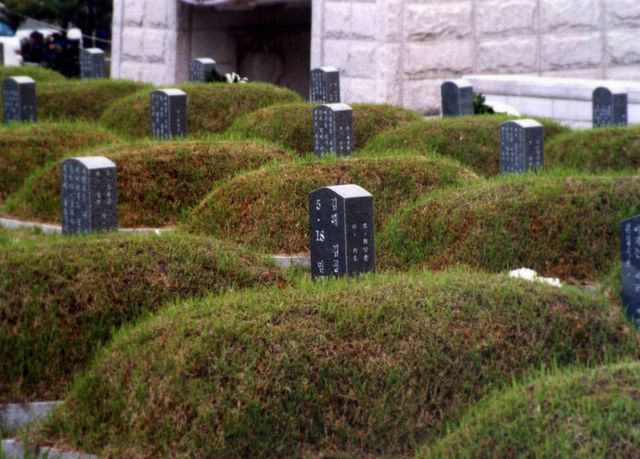
518 National Cemetery, Kwangju Posted by Hello

17 May 2005

MAY 18 - 25 Years On


Kwangju, May 18, 1996 Posted by Hello


May 18

May 18 is rapidly approaching, and once again my adopted hometown remembers; this time 25 years ago. That is a long time. In that time the “Kwangju Massacre” has transitioned through the “Kwangju Uprising” to the “Kwangju Democracy Movement.” As the words transition, so do the memories. I am unable to be therer again this year, but I point to observations from the 2004 memorial.

From 1996 to 2004, May 18 Revisited: Part I
From 1996 to 2004, May 18 Revisited: Part II
From 1996 to 2004, May 18 Revisited: Part III
From 1996 to 2004, May 18 Revisited: Part IV


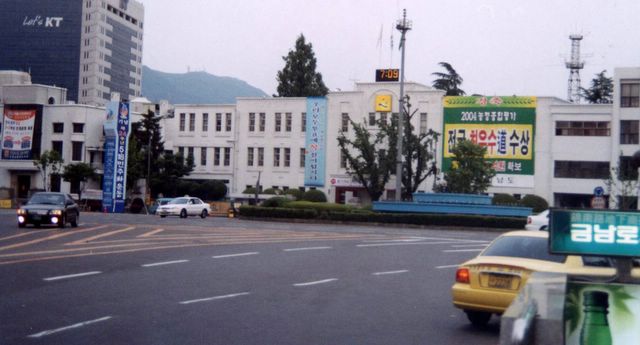
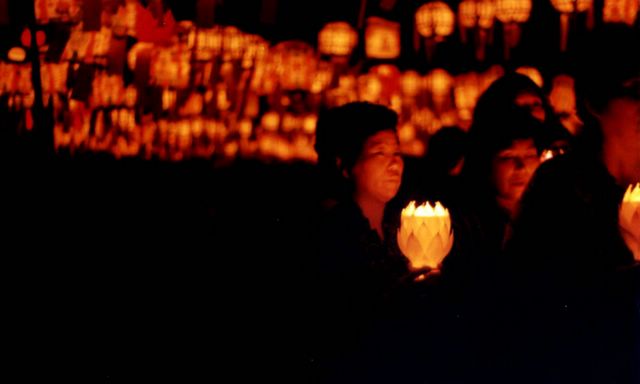
Kwangju, May 18, 2004 Posted by Hello
This year, I expect to see the memorial once again focus on anti-Americanism, particularly as demonstrations have already turned violent this May over the PAC3 systems installed at the Kwangju Airbase.

The following are some links that may be on interest.

Gwangju, City of Hope and light
The Character of the May 18th Gwangju Democratic Uprising
May 18 Cemetery
May 18 historical place
The May 18th Gwangju Peoples' Uprising 1980-1987
1988, 1989
1990-1998
Remarks by President Kim Dae Jung on the 20th Anniversary of the May 18 Kwangju Democratization Movement
May 18 Cemetery – Tour2Korea
BBC overview of Kwangju events

May 18 Memorial Foundation
Chronology from May 18 Memorial Foundation
Kwangju Uprising – from OnWar.com A
Kwangju Uprising – from OnWar.com B
Commentary on the 24th anniversary commemoration (2004) by Chosun Sinbo (People’s Korea), DPRK news from Japan
Korea Times report of 21th anniversary of Kwangju Uprising
CNN story on Kwangju from 1996
An eyewitness report of the Kwangju Citizen's Uprising in 1980 by Jurgen Hinzpeter, ARD-NDR German Television Studio
Kwangju in the Eyes of the World by Kwangju Citizen’s Solidarity
Kwangju Subway
Kwangju Ilbo
Kwangju Times
Moodeung Ilbo


Kwangju, May 17, 2004 Posted by Hello

16 May 2005

11 May 2005

Bush Reads Up on DPRK

Apparently U.S. President George W. Bush is reading The Aquariums of Pyongyang, according to Yonhap, and telling his aides he is reading it (perhaps so that they can spread the word?). Now, it is nice to see Bush taking an interest in actually reading about the countries he calls bastions of tyranny and may or may not be planning to invade.

If you haven’t read the book, it is an interesting (if somewhat dated) read, both for the obvious exposition on prison camps and the criticism of the North Korean political system and for other smaller, less noticeable insights into everyday life and thinking in North Korea.

The comments on the military being a path for upward mobility (p. 236) correspond with Chapter 10 of Helen-Louise Hunter’s Kim Il Sung’s North Korea, which also discusses the military not only as a source of social and academic growth, but also the path for more and better food, and a source of national agriculture and infrastructure development.

Now I understand this distinction is fading, and there are reports of the military losing some of its privileges and status, but it remains one of the strong social and economic forces in the country – for good or bad.

One other quick read the president may want to consider is Michael Breen’s Kim Jong Il: North Korea’s Dear Leader, which is a largely anecdotal portrayal of the life, actions and mind of Kim Jong Il. A quick read and a little less dated than Hunter’s, though certainly not from the same source material (a North Korean defector in her case).

As for me, I am currently reading the three-volume set The Korean War published in English by the University of Nebraska Press. It is written by the Korea Institute of Military History, (which I believe is based at the Korean War Memorial in Seoul), and gives the updated Korean view of the war. It is a good compliment to any of the U.S. official or anecdotal histories, as it also offers the occasional success of the South Korean forces rather than simply dismissing them as bumbling extras (particularly note the anti-tank suicide squads, as the United States gave the fledgling ROK military no anti-tank mines and no anti-tank weapons that could pierce the T-34 armor).

10 May 2005

Nazis, Nukes and Negotiations

While folks in Moscow are celebrating VE day and the defeat of the Nazis, the real events are the brief 10, 20 and even 50 minute meetings that are taking place on the sidelines of the official 60th Anniversary commemoration. In addition to the much-highlighted Bush-Putin summit, and the repeated images of Bush driving Putin’s car (I don’t recall Bush letting Putin drive the truck down in Crawford), there were several bilaterals that related to the Korean Peninsula, including meetings between Hu and Roh, Hu and Putin, Roh and Putin and even in part the Koizumi/Putin meeting, though that was more about trying to look friendly while sending signals of intense dislike.

Amid the flurry of news reports on the imminent North Korean nuclear and missile tests (and I will diverge briefly in a moment as an addendum to correct a previous discussion on the Silkworm), there were actually quite a few glimmers of progress in the ongoing non-talks over the nuclear crisis. Hu hinted that there was about to be a major change in the situation as Washington leaked that Beijing had refused to suspend oil shipments to the north but did hint at possible food and other economic suspensions. Washington reiterated that North Korea was, in fact, a sovereign nation. And North Korea hinted that, should Washington recognize that North Korea is a sovereign nation, Pyongyang may consider returning to talks, and would even come back to six party talks, dropping earlier pseudo-demands that Pyongyang only wanted direct bilateral talks with Washington.

In general, the public outcry over the direness of the situation is providing a convenient mask for the more subtle nuances of negotiations playing in the background – a diplomatic dance that, if carefully choreographed, can suddenly rend a solution from the irresolvable stubbornness of the North Korean and U.S. positions. Of course, few parties really want to see a North Korean nuclear test, least of all North Korea if it can find some other face-saving solution to back out of its self-created crisis, so the unity of goals is present. The only thing left is the ability of each side to give in a bit while not making it extremely obvious that they gave in a bit.

Two other things. First, if North Korea didn’t want people to see it was building a reviewing stand and filling in a mine in Kilju, it wouldn’t allow it to be seen. Look, this is the land of the mole people, and they are quite aware of the constant stream of satellites imaging every square inch of above-ground North Korea, and probably a few inches underground as well. They WANT to be seen. It doesn’t mean they wont do something sometime, but it does mean that, as with their clear statements like “we have nuclear weapons” and “we are reprocessing fuel rods to make weapons grade plutonium,” the North Koreans have never really tried to hide their true intentions and actions except beneath the veneer of the extremely obvious and blunt.

And second, it wasn’t a Silkworm, but a modified SS-21 Scarab, the KN-02. While the political message remains unchanged, the added significance includes the potential to re-establish the lucrative overseas missile trade by selling a quite useful battlefield weapon to eager clients, as opposed to the few-and-far-between high-end No-Dong sales.

SS-21 from FAS
SS-21 from Claremont Institute
Arirang TV on SS-21 launch
Korea Times on SS-21 launch
KBS Global on SS-21 launch

03 May 2005

On The Road Again?


Kim inspecting a Combined KPA unit on April 27, 2005. (Photo from the Rodong Shinmun via Uriminzokkiri)Posted by Hello

Kim Jong Il made some 13 visits to different locations in April, the last to a large combined unit of the KPA on April 27. He has made no further appearances since. In the mean time, Pyongyang has tested a Seersucker surface-to-ship missile, a possible reason for Kim to lay low for a day or two.

However, there is another possibility for Kim’s end to his tour around the country – he left. Now there is little to show he HAS left North Korea, but Kim was invited to Russia’s 60th anniversary memorial gathering to mark the end of WWII. Kim has not confirmed, and there are reports he won't show up at all, but there are still those in Moscow holding out some hope.

If he were heading to Moscow by train (which he has done before), it is about a 10 day trip – and the festivities begin May 9. If things are in perfect order, his train could get to Moscow in half the time, but the rail lines are never perfect, so the four or five days seems a tad quick.

Now, there is no current evidence out there that Kim IS on his way to Moscow (where he would be able to meet with Vladimir Putin, Hu Jintao, Junichiro Koizumi, Roh Moo Hyun and George Bush, but if he did show his bright and shining smile at that international gathering, what a PR coup for Moscow, and for Kim himself. Imagine him sitting next to Roh and Bush as they watch the parades?!

02 May 2005

Kim Jong Il’s Seersucker Suit

North Korea tested a Seersucker anti-ship missile from a base north of Hamhung May 1 at the conclusion of its annual winter military exercises. The seersucker is a variation of the Silkworm missile, a seven and a half meter subsonic anti-ship missile that serves as part of North Korea’s coastal defense system. North Korea tested at least four such missiles in 2003 – all timed for maximum political impact.

This one, too, appears timed for politics more than for security reasons. First of all, the Seersucker isn’t exactly what one calls a state-of-the-art cruise missile – it is large, slow and extremely vulnerable to ship-based countermeasures. That said, it was a Seersucker missile that landed near a U.S. marine base in Kuwait in 2003 at the start of the Iraq war – it appears it was flying below the active radar level of the Patriot Pac-3 anti-missile batteries.

North Korea’s May Day missile test comes one day before the 2005 Review Conference of the Parties to the Treaty on the Non-Proliferation of Nuclear Weapons (NPT). North Korea withdrew from the NPT in January 2003 after just one day warning – claiming the other 89 days necessary to warn before withdrawal took place years earlier when Pyongyang nearly withdrew, but changed its mind after 89 days.

The missile test initially sent ripples throughout Northeast Asia, as Washington has been warning that a North Korean ballistic missile test could be coming, soon. Washington has also been warning of a potential North Korean nuclear test, and cautioning that Pyongyang may have the technical capability to marry a nuke to a missile. That would mark a substantial improvement in the North’s nuclear capability, as it currently lacks the ability to make nuclear devices small enough to be carried by its ballistic missiles.

North Korea’s shore-to-ship missile test ranks far below a ballistic missile test in terms of both military and political impact. It is a reminder that Pyongyang is still there, and that it has other, more significant missiles in reserve. But North Korea has always been cautious about testing its missiles, as it presents a chance for revealing too much about the advancement (or lack thereof) of the missile program, and risks spectacular failure. Better to let buyers test North Korean missiles – just watch the Pakistani and Iranian tests for example – and know that the technology is functional.

But Pyongyang is likely preparing a ballistic missile test – just not quite yet. Wait for the autumn, when there are plenty of politically significant times for a test. And watch the skies – maybe Pyongyang will do a better job of getting its satellite into orbit this time and all the world will be graced with the Song of the Dear Leader broadcast 24 hours a day for three or four days as the sputnik clone orbits the earth.

Half-Baked Amoral Hooligan Philistine...

Whatever I said previously about North Korea’s slipping propaganda talk, I was certainly premature. Pyongyang has apparently replaced its dry script-writer with one much more attuned to the more classic taunts and rants. The latest descriptions of U.S. president George W. Bush (who himself seems unable to come up with anything better than the medieval “Tyrant” in describing Kim Jong Il) are regaining past glories. Bush is, according to Pyongyang, “a hooligan bereft of any personality as a human being, to say nothing of stature as president of a country," and “a half-baked man in terms of morality and a philistine.” Now, words like this may seem silly when Pyongyang has shut down its nuclear reactor with the threat to take out the fuel rods for reprocessing and is tossing Seersucker missiles into the East Sea, but... well, maybe there is no “but.” Maybe it is all just silly. So leave me alone, all you half-baked philistine’s bereft of personality. Your mother was a hamster and your father smelt of elderberries...