26 August 2005

No Dokdo, No Dispute?


So in the 1960, Japan really did suggest blowing up the Dokdo islets as a way of settling the disputed boundaries between the two states amid negotiation to establish formal diplomatic relations.

The story isn’t new, even if some of the documents have just now been declassified by the South Korean government, but it will certainly keep South Koreans interested in emphasizing their own claim to Dokdo (Takeshima in Japan).

(A side note, it is a good thing that another idea from the 1960s - the transfer of a U.S. military base from Okinawa to Cheju - never worked out. It would have been quite a pity to spoil the beautiful island.)

The timing of the release of the Dokdo destruction documents, even if the information was largely known already, makes one wonder if the ROK government is trying to re-emphasize to its own people that the bigger threat comes from the east, rather than from the north.

South Korea’s recent launch of the Dokdo LPX was certainly an eye opener for Tokyo, which is yet to launch its next generation of helicopter carrier/amphibious assault ship. Unlike the 1960s, Seoul is showing itself quite capable of defending itself – or at least headed in that direction.

On a side note, it appears Japanese Prime Minister Junichiro Koizumi has taken a book out of Roh Moo Hyun’s book and, while not courting impeachment, he certainly forced a showdown with his own party, and is now in the midst of purging any disloyal to himself.

His ambition is to create a situation where his own party members need him if they are to win any seats. But after that, he wants to redesign the Japanese political system, and bring about direct elections for the Prime Minister. He is also seeking assistance from some of the opposition, though much more quietly than Roh.

For his part, Roh used his impeachment to create the national movement that weakened the conservative opposition and gave the initial boost to the Uri Party (something that has by now worn off), but Roh, too, has his sights on something loftier – the remodeling of the South Korean political system. He wants to abandon the one-term presidency, which creates a situation where the leadership becomes a lame duck two and a half years after taking office, leaving half the term to the bickering national assembly.

Both Roh and Koizumi face uphill battles, yet both nations could be served by the political changes. And both Roh and Koizumi, in their own distinct ways, are relying on their own personal popularity, or force of personality and image as maverick reformers, to drive them toward their final goals. And while both may now claim that they have no further political ambitions beyond revising and updating their respective systems, both long for an additional stay in power, less encumbered by their parliaments and more empowered by their populace.

25 August 2005

China and the Sept. 2 Re-Start

Chinese Vice Foreign Minister Wu Dawei said Aug. 25 that Beijing and Tokyo are discussing a Sept. 2 restart to the six-party nuclear talks. This would put the start date at the very end of the planned restart week, suggesting that negotiations backstage continue in earnest and more time is needed by one or more participant. The outstanding issue remains the civilian nuclear program – or at least the wording – and Washington and Seoul appear close to a compromise after Ban’s recent visit. Pyongyang has hinted at a potential delay after Washington and Seoul held the annual Ulci Focus Lens, so Beijing’s delay may be related. Moscow’s position remains unclear, but given the hints at energy cooperation and Moscow’s role in the degradation of the final days of the last round of talks, whatever time they restart, Moscow obviously wants a role steering the process. One side note is that Chinese President Hu Jintao is scheduled to meet with U.S. president George W. Bush at the Whitehouse Sept. 7, so maybe Beijing wants to try to tie some victory at the six-party talks to the Hu-Bush visit to take the credit for the success.

22 August 2005

Define "Trust"

Two minor items of interest over the weekend – one was Foreign Minister Ban Ki Moon’s comments to CNN, the other was the Asahi story on the restart of the Yongbyon reactor. Both are related.

Ban basically expanded on president Roh Moo Hyun’s comments on North Korea having the right to a civilian nuclear program, adding a little detail to what it meant to gain trust – dismantle all nuclear weapons and programs, return to the NPT, Comply with the full scope of IAEA safeguards. Only after those three confidence building measures, then can there be a discussion of North Korea starting a civilian nuclear program.

Ban’s comments were for Washington’s consumption, though the actual South Korean position is a little less strict – it is not as interested in requiring the exact timing sequence – full compliance then discussions about next steps. In essence, the South’s position is that as long as the North is dismantling the current program, it can begin negotiations for new civilian reactors. The North has restarted work on one of its reactors – likely to get more reimbursement for decommissioning.

Meanwhile, the Asahi reported that U.S. satellites picked up signals (steam) that North Korea had restarted the Yongbyon reactor not long before the start of the fourth round of the six party talks – something that South Korea has denied.

Japan was shunned throughout the last round of talks, and sees the very real potential for U.S. compromise on the question of civilian nuclear programs in the future – and thus Tokyo is losing its ability to interpose its particular domestic issues into the six party forum. The idea, too, of Seoul being quite accepting of North Korean nuclear development is also troubling Japan, as a unified Korea remains a distinct potential threat to Japan’s political and economic influence – and a Korea with nuclear and missile capabilities becomes even more disconcerting.

Thus, this weekend, we saw ban reassuring Washington that the South wasn’t completely loony when it cam to North Korean nukes, and Japan trying to convince Washington that North Korea can never be trusted, and not to sign any deal that doesn’t require the complete and eternal dismantling of any nuclear program in the North.

Just a week to go for everyone to get their ducks in a row before the restart of the six party talks. Meanwhile, Pyongyang received a low-key visit from Dod Ebgenii Vyacheslavovich, General Director of RAO EES (United Electricity Networks of Russia), so maybe there is finally progress in reassessing the sorry state of the North’s energy grid.

19 August 2005

Simple Solution...

After Russia’s off-handed offer of civilian nuclear program to North Korea, Pyongyang demanded he right to a civilian nuclear program in any deal to come out of the six-way talks, creating a deadlock with Washington, which demands North Korea never again take up even civilian nuclear programs ala Libya.

Now, this certainly poses a dilemma – assuming that both North Korea and the United States want a solution soon. So South Korean President Roh Moo Hyun offered his own compromise – he said his government thought North Korea was perfectly justified in having a civilian nuclear program… once it had demonstrated to the world it was trustworthy. In essence, once it had dismantled its current nuclear program, it could think about a new one.

The compromise may well in the end be implemented. Washington gets verifiable nuclear dismantling in the North (of course Pyongyang will want IAEA or other inspections of U.S. military facilities in the South to verify there are no U.S. nuclear weapons in Korea, but that is a different problem). Pyongyang has the right to a civilian nuclear program – it just doesn’t act on that right immediately.

After it dismantles the current facilities, and complies with IAEA directives and the NPT, then it can start with new reactor construction – and Russia says this could take half a decade or more. So a long delay. And who knows what happens to the North and its government and system in that time. With diplomatic ties between Washington and Pyongyang established, the perceived immediate threat to the North is diminished, as is the more immediate desire for nuclear weapons.

While this seems a nice tidy solution, it of course isn’t. It depends upon one outstanding question – how serious are Washington and Pyongyang in resolving the current nuclear issue at this time? For Pyongyang it finally offers the security and prestige it desires, for Washington it is a high-profile foreign policy victory for an administration that is perceived to have few if any, and it takes a lever away from China – a more strategic U.S. concern. But if these more distant goals have no pressing need, then this seemingly simple compromise once again becomes a deal breaker.

It is now down to a matter of desire – everything else is lined up.

Additional reading:

North Korea Status Report: What's Next After Round Four of the Six-Party Talks?
Jack Pritchard, Brookings Institute

North Korea's nuclear program, 2005
Bulletin of the Atomic Scientists

Ending the North Korean Nuclear Crisis: A Proposal by the Task Force on U.S. Korea Policy
Selig Harrison

North Korea: 2005 Outlook
By Brent Choi

18 August 2005

Weekly Readings

Here are a few readings on Korea/U.S. relations from the 1800s. There is no agenda in presenting this, aside from sparking some interest in looking at history as much as current affairs. There are multiple views of these events, many more than I have offered links to. History is not fact, it is interpretation, selection, and isolation of specific aspects of fact, culture, viewpoint, access, knowledge and emotion – so always seek as many views on an event as possible. This is barely a start.

Excerpt from "A Brief History of the US-Korea Relations Prior to 1945"

Report of the Secretary of the U.S. Navy on the General Sherman Incident, 1867

1871 U.S. Korea Campaign

U.S. Medal of Honor recipients from the 1871 Korea Campaign

The First US Naval Attaché to Korea

17 August 2005

Kim Jong Il Has Borscht With His Kimchi

Just an interesting side note: while the inter-Korean commemoration of the 60th anniversary of Liberation Day was taking place in Seoul, with the North Korean delegation present, in Pyongyang Kim Jong Il was hanging out with the Russians. Kim met with Konstantin Borisovich Pulikovski, presidential envoy to the Far East Federal District of Russia (and a frequent interlocutor with Kim), as well as a delegation of the Russian veteran law-makers and the visiting Russian State Academy Beryozka Dancing Troup, throwing a banquet for one and all.

Now, I raise this because on August 1, an unnamed official from RosAtom (Russia’s Federal Agency for Atomic Energy), told Itar-Tass that Moscow could build a nuclear power plant in North Korea in six or seven years, and that “this is quite possible if the construction of such nuclear power plant will be commercially profitable for Russia and North Korea will return to the treaty on non-proliferation of nuclear weapons.” On the same day, Valery Yermolov, deputy head of the Russian delegation to the six-nation talks, said Moscow could offer electricity and natural gas supplies to North Korea, as well as reconstruction of thermal power plants built with Soviet assistance, in return for Pyongyang’s termination of its military nuclear program.

Not long after these statements, the six-party talks spiraled into ineffectiveness, and North Korea altered its position, demanding August 4 that it be allowed to maintain a civilian nuclear program. Three days later, the talks recessed for three weeks.

While Moscow had apparently attempted to make it seem like it was playing little role in the six-party talks (the Russian chief delegate left early), it was apparently playing behind the scenes – and the nuclear power offer apparently tipped the scales for Pyongyang. Now we see Kim Jong Il spending time with the Russians (not the Chinese) to mark Liberation Day. While this may be seen as logical on one level – after all, it was Russia that joined the Pacific war in the last days and therefore was given the right to occupy – sorry – oversee – the northern half of Korea, so Russia shares in the VJ Day recognition. But Chinese-North Korean relations have been on the skids for months, and this, coming on the heels of embarrassing the Chinese in the final days of the six-party talks, certainly will grate on Beijing.

Now look to the west of North Korea just a bit, and watch the joint Russian/Chinese amphibious, paratroop and naval assault operations, and see Russia showing Pyongyang how it could come to its former apprentice’s aid if there was a war with the United States, and suddenly the visit to the dancing troops doesn’t seem so jocular.

Add in that at the same time at the beginning of August is when RosAtom officials said Iran was in its rights to pursue a nuclear program, and that Russia would continue to work with Iran in its nuclear program, and we see a concerted Russian effort to try to play two simultaneous crises for the united States. And while Washington may see these two (Iran and North Korea) as somewhat unrelated, Moscow certainly doesn’t.

15 August 2005

August 15.

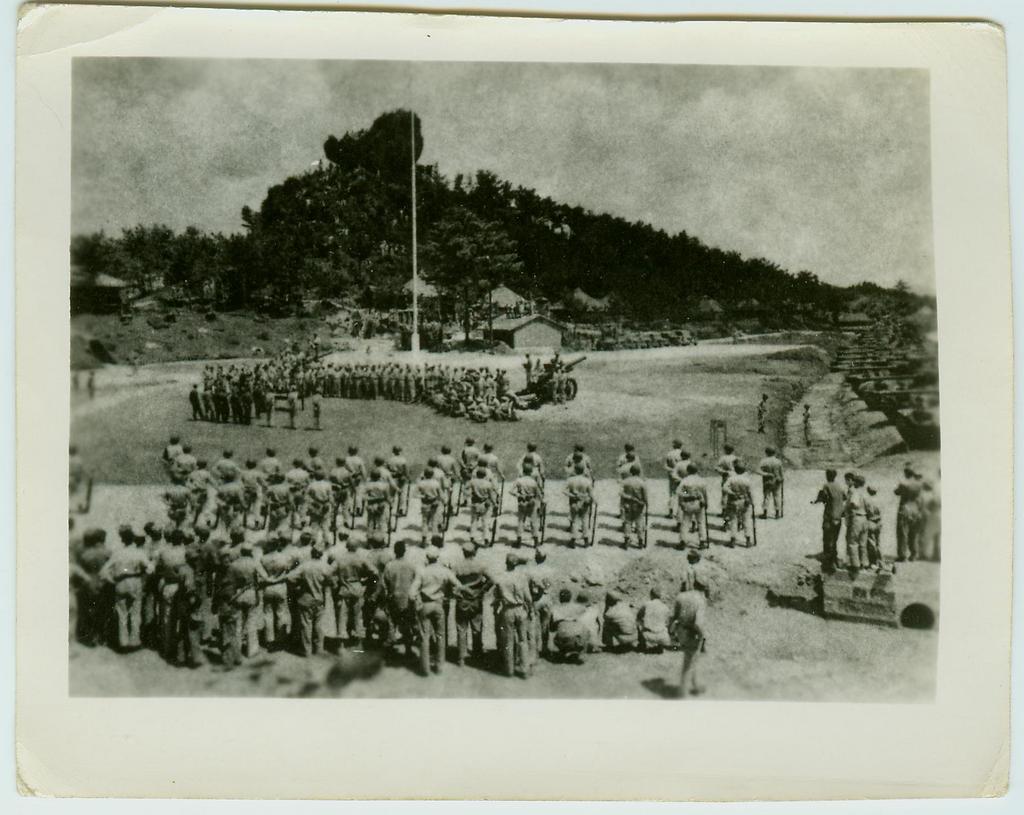
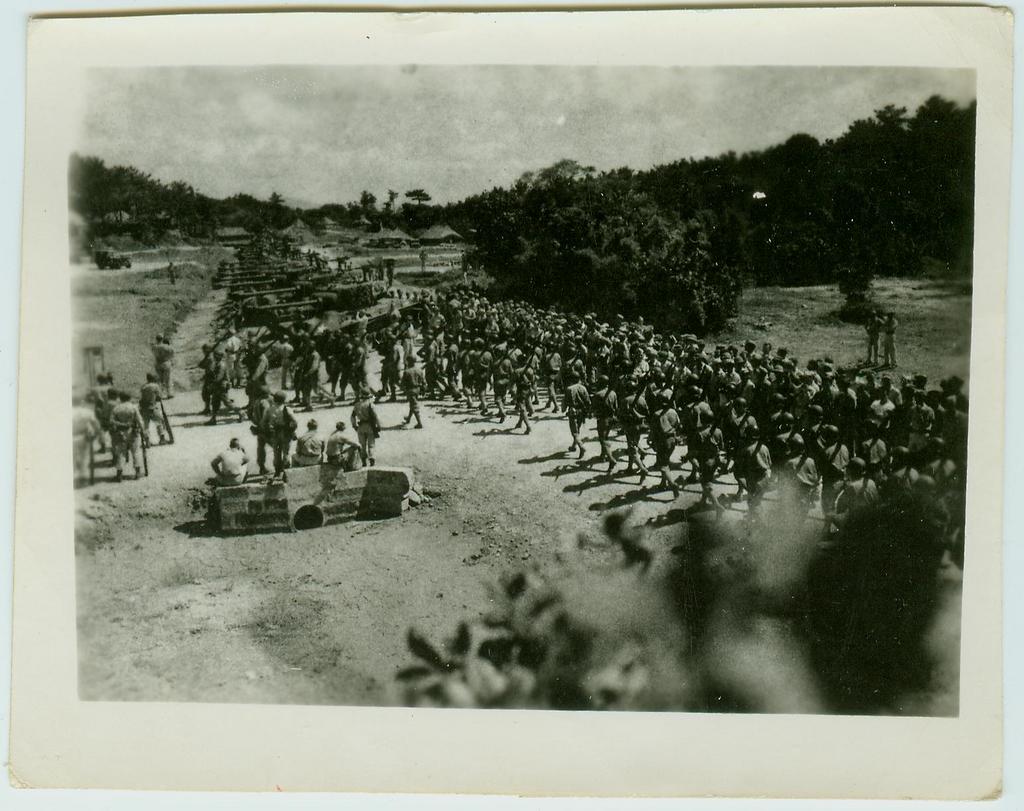
Today marks Korean Liberation Day, VJ day, and most anything related to the surrender of Japan, ending WWII. However, for the allied forces in the Pacific, it wasnt suddenly over Aug. 15. Here are a few pictures from Okinawa, the Sept. 7 surrender of Japanese forces in the Ryukyu Islands.


These were shot by my Grandfather, a Marine on Okinawa at the time.


Over the next few days I will add more pictures from Okinawa and the Pacific campaign, now 60 years gone.