
Chinese President Hu Jintao told Moon Hee Sang, Chairman of the Uri Party, that he has no plans to visit North Korea soon. Hu added that "It is true Chairman Kim Jong Il has invited me and I accepted the invitation," but gave no timetable for a trip.
Hu’s visit to Pyongyang has been delayed several times (see also 1,2,3,4), a sign of the continuing strain in relations between the two neighbors. North Korea has left China high and dry several times in the current nuclear crisis as Beijing attempted to use its sway in Pyongyang as a negotiation tactic with Washington. Instead, Pyongyang has used China, and leaned more toward South Korea, with the occasional flirtation with Russia (see also 1,2). This has left Beijing looking the fool at times, and feeling increasing heat from Washington.
Hu’s public snub of a soon-visit to Pyongyang serves as a reminder to the North that China is not pleased, and further that China can always reduce its support – political and economic – of the North. But Pyongyang is less concerned of this than it has been in the past, given the evolution of Seoul’s attitude toward the North.
And the strange dance continues.
24 September 2005

22 September 2005
North Korea’s Ego – Propaganda and the Big Dong
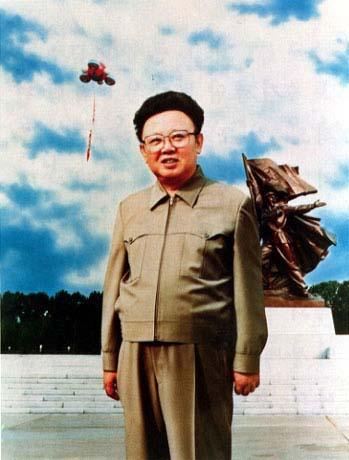
North Korean propaganda has always intrigued me. It always seems so contrived and over the top. But there is perhaps a correlation between Pyongyang’s ego and its propaganda.
Take the ever-popular moniker for South Korea’s government: “Puppet.” Pyongyang at one time only ever referred to the South Korean authorities as a puppet regime. This was designed to de-legitimize the South Korean government and served as a subtle (well, as subtle as North Korea ever is) way to show that the southern half of Korea was simply occupied by the United States, and that North Korea was the only legitimate rule on the peninsula.
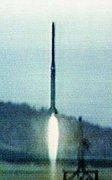
Now, if you run “puppet” in the NK News' wonderful Database of North Korean Propaganda, and use the bar graph representation, you see a sudden end to the use of the term “puppet” in August 1998. This is no coincidence. It was August 31, 1998 that North Korea launched its first SLV (Satellite Launch Vehicle), the Taepo-Dong I (AKA Paekdusan-I). After this emergence onto the world stage (even if the launch wasn’t as successful as Pyongyang had hoped), North Korea significantly reduced use of the “puppet” moniker.
In September, Kim Jong Il was elected head of the NDC, and finished his extended mourning period for his late Father Kim Il Sung. The new era of Kim Jong Il had begin, and the shift toward South Korea was seen quickly. (Remember, less than two years later then South Korean President Kim Dae Jung was in Pyongyang).
21 September 2005
Show Me the Reactors
North Korea dismayed observers (or simply fulfilled the observers’ basic assumption of North Korean trustworthiness) Sept. 20 with a statement from the Ministry of Foreign Affairs seeming to renege on the six-party joint statement signed only a day earlier. In the Ministry statement, the unidentified spokesman said
“We made it clear that the basis of finding a solution to the nuclear issue between the DPRK and the U.S. is to wipe out the distrust historically created between the two countries and a physical groundwork for building bilateral confidence is none other than the U.S. provision of LWRs to the DPRK.”The translation is that North Korea won’t believe Washington recognizes Pyongyang’s right to a civilian nuclear program until Washington provides such a program. This, I guess, would be a case of “action for commitment,” as opposed to the “commitment for commitment, action for action” as written in the six-party agreement.
The spokesman further expounds upon this line by adding
“As clarified in the joint statement, we will return to the NPT and sign the Safeguards Agreement with the IAEA and comply with it immediately upon the U.S. provision of LWRs, a basis of confidence-building, to us.”Now, given that the next round of talks isn’t slated until November, Pyongyang may simply be trying to take any wind out of the U.S. administration sails should Washington try to tout a victory over North Korea’s nuclear ambitions. Given troubles at home for Bush, even a tiny foreign policy victory would be welcome, but with Hurricane Rita filling the airwaves, the resolution (sort of) of nearly three years of nuclear negotiations gets short shrift on the cable networks.
Another alternative is that Pyongyang is truly trying to tank the deal. Yonhap is reporting an unnamed South Korean official as saying that Kim Jong Il told Unification Minister Chung Dong Young that North Korea would draw out the nuclear uncertainties until the end of the Bush term – three years from now. Of course, the unnamed official may simply be perturbed at the attention North Korea is getting from President Roh, and concerned about the massive economic push Roh is seeking to build up the North.
And this brings to another possibility. Pyongyang feels pretty confident right now. It managed to get a deal that largely ensures its interests without trading much in return. The structure of the six-party agreement leaves economic and energy issues in the hands of individual states rather than in a multi-party format. (See point 3: The six parties undertook to promote economic cooperation in the fields of energy, trade and investment, bilaterally and/or multilaterally.)
This means that, unlike the 1994 Agreed Framework, which put the KEDO reactors in the hands of a multinational consortium, where one nation’s non-participation would negate the involvement of the others, the new agreement doesn’t so much trade the denuclearization of North Korea for a specific raft of multi-national projects as much as it creates a process where both occur – not necessarily contingent upon one-another’s timing.
Thus South Korea can accelerate its bilateral cooperation with the North as part of its own aim to strengthen the North Korean economic and social system in preparation for eventual unification even as Washington and Pyongyang bicker over the timing or existence of light water reactors. Pyongyang has removed Washington as the key to all future economic, political and security dialogue. And Seoul is seeking to exploit this to enhance its own role as the mediator between Pyongyang and Washington, rather than sit on the sidelines and follow the U.S. lead (or be overtaken by the U.S. initiatives).
This creates an interesting dynamic on the Korean Peninsula, one in which North Korea’s security is, to a large degree, ensured by South Korea, whose cooperation would be necessary for any U.S. military action against North Korea. China and Russia are less important players to Pyongyang, though the North will continue to seek to exploit those relationships, but with Beijing, for example, trying to use North Korea as a lever with Washington, Pyongyang has to some extent extricated itself from the additional Chinese coercion.
Ultimately, this may set up South Korea and Washington for a deeper confrontation, or simply convince Washington to walk away again for a while and leave Seoul to manage Pyongyang. And this would leave president Roh, who is weak at home, as the pivot of Northeast Asian security for his remaining years in office.
20 September 2005
Looking Ahead to 1992
The joint statement of the six-party nuclear talks includes a reference to the 1992 Joint Declaration of the Denuclearization of the Korean Peninsula, a bilateral agreement between North and South Korea not to possess or test nuclear weapons or enrich uranium. In that declaration, a South-North Joint Nuclear Control Commission (JNCC) was established to oversee inspections of one another'’s nuclear facilities as well as oversee all aspects of fulfillment of the agreement. The JNCC met 22 times between is establishment on May 18, 1992 and its dissolution in January 1993.
On a side note, SeoulÂ’s agreement with North Korea'’s right to have a civilian nuclear program is nothing new, as it is a key feature of the 1992 agreement as well.
What this says about the future is, well, who knows, but it is interesting to look back at previous documents on Korea's nuclear programs and see that the more things change, the more they stay the same. It will be important to watch the bilateral inter-Korean aspect of the new joint declaration to see just how far both sides are committing to the idea that reunification is inevitable, and better to start strengthening both halves and reducing the socio-economic gap now then to wait until reunification and delay the rectification of economic and development divisions.
On a side note, SeoulÂ’s agreement with North Korea'’s right to have a civilian nuclear program is nothing new, as it is a key feature of the 1992 agreement as well.
What this says about the future is, well, who knows, but it is interesting to look back at previous documents on Korea's nuclear programs and see that the more things change, the more they stay the same. It will be important to watch the bilateral inter-Korean aspect of the new joint declaration to see just how far both sides are committing to the idea that reunification is inevitable, and better to start strengthening both halves and reducing the socio-economic gap now then to wait until reunification and delay the rectification of economic and development divisions.
19 September 2005
Not Quite "Peace in Our Time"
The typical North Korean nuclear negotiating tactics was clearly seen today in the beginnings of two Yonhap new releases not far apart from one-another. First:
And Second:
Now, the devil is in the details, as everyone is going to be saying, but it seems Pyongyang has simply stalled from an agreement until after Chusok, for some unknown North Korean reason. The hard work is yet to come, the most interesting outcome is the separate forum to be established for a Northeast Asia security dialogue.
SEOUL, Sept. 19 (Yonhap) -- North Korea vowed it won't compromise in its negotiations with the United States on Monday, as the six-party talks on the North's nuclear weapons program seemed to be nearing an end with the expectation of an agreement, positive or not.
And Second:
BEIJING, Sept. 19 (Yonhap) -- North Korea has promised to scrap all its nuclear weapons and weapons-related programs and rejoin an international non-proliferation regime in exchange for political and economic benefits, a joint statement said Monday.
Now, the devil is in the details, as everyone is going to be saying, but it seems Pyongyang has simply stalled from an agreement until after Chusok, for some unknown North Korean reason. The hard work is yet to come, the most interesting outcome is the separate forum to be established for a Northeast Asia security dialogue.
16 September 2005
Banning the National Pastime?
In an apparently unpatriotic move, osensibly triggered by health concerns, GNP Representative Park Jin has launched the "Group for Cleaning up Boilermakers." Sporting signs denouncing the drink, Park launched the campaign Sept. 14. In an apparently partisan move, Uri Representative Yoo Ihn Tae declined joining the group and was quoted as saying "How can I live without boilermakers?" Vice Speaker of the National Assembly Park Hee Tae said "I cannot join the group, as I'm the leader of the boilermaker lovers."
For those who don’t know what a Boilermaker is, watch any Korean TV drama, or go out for an evening drink with a politician, businessman or gangster (or someone who is all three). Or just see the recipe here.
On a more serious note, this new anti-boilermaker campaign comes shortly after the release of a study by Hongik University professor Chang Keun Ho, which notes that, in 2002, Korea ranked fourth in the world in consumption of distilled liquor (like whisky and soju), trailing only Russia, Latvia and Romania. According to his study, Koreans drank some 4.5 liters of distilled liquor in 2002 (and that doesn’t count beer). The average Korean over age 21 consumed 68 bottles of soju and 248 bottles of beer in 2003. Some 20 percent of Korean adults have signs of alcohol addiction, according to the study.
For those who don’t know what a Boilermaker is, watch any Korean TV drama, or go out for an evening drink with a politician, businessman or gangster (or someone who is all three). Or just see the recipe here.
On a more serious note, this new anti-boilermaker campaign comes shortly after the release of a study by Hongik University professor Chang Keun Ho, which notes that, in 2002, Korea ranked fourth in the world in consumption of distilled liquor (like whisky and soju), trailing only Russia, Latvia and Romania. According to his study, Koreans drank some 4.5 liters of distilled liquor in 2002 (and that doesn’t count beer). The average Korean over age 21 consumed 68 bottles of soju and 248 bottles of beer in 2003. Some 20 percent of Korean adults have signs of alcohol addiction, according to the study.
Light Water Blockage
The fourth round of the Six Party nuclear talks has stalled as it began – or at least that is the impression being given from Beijing. Pyongyang apparently opened the talks with the demand that the U.S. supply light water nuclear reactors and Washington said “NO.”
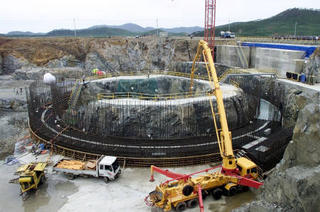
Now, it is somewhat unclear if these are supposed to be new reactors, or the KEDO reactors [seen in this image from 2002] that were never completed, but North Korea’s delegation knew before going into the talks that this would be a non-starter. While U.S. President George W. Bush made it a point to say Washington recognizes every country has the right to a civilian nuclear program (he was talking more specifically about Iran, but the message was to both), it doesn’t mean Washington really wants these nations to have programs.
Furthermore, even the South Koreans noted that North Korea’s civilian program wouldn’t come until after the North had dismantled its existing programs and regained the trust of the international community via participation in inspection regimes. Christopher hill also noted that Washington didn’t see why the North needed a program, and that his first task was to ensure the dismantlement of the current program before talking about anything coming next.
Russia, which suggested the possibility of nuclear reactors in North Korea, doesn’t support any immediate new construction, and neither does China. And there is little need to ask Japan what it thinks, because the answer is obvious.
Given that the North Korean negotiators are not stupid, it must be assumed that they know that their current demand will not be met. So what are they doing? Do they want to tank the talks? Or is this just one more bargaining chip? Something to distract the masses while they wait to ask for increased money or something else? Or are they just stalling for time?
Pyongyang ultimately wants security, and it sees that as coming through diplomatic ties with the United States. Condoleezza Rice has suggested this is ultimately possible. There is plenty of room for compromise, particularly as Washington wants to be able to put this particular crisis behind it, given the troubles with Iraq, Iran and Katrina.
Thus, a "breakthrough" is likely, but not right away. Obviously Pyongyang is playing hard to get. It wants to dominate and control the talks. And it may be doing this to demonstrate that it is not a tool of Beijing or Moscow (despite the notable presence of the Russian and Chinese embassy staff at the departure of the North Korean negotiating delegation from Pyongyang to Beijing).
Now, it is somewhat unclear if these are supposed to be new reactors, or the KEDO reactors [seen in this image from 2002] that were never completed, but North Korea’s delegation knew before going into the talks that this would be a non-starter. While U.S. President George W. Bush made it a point to say Washington recognizes every country has the right to a civilian nuclear program (he was talking more specifically about Iran, but the message was to both), it doesn’t mean Washington really wants these nations to have programs.

Furthermore, even the South Koreans noted that North Korea’s civilian program wouldn’t come until after the North had dismantled its existing programs and regained the trust of the international community via participation in inspection regimes. Christopher hill also noted that Washington didn’t see why the North needed a program, and that his first task was to ensure the dismantlement of the current program before talking about anything coming next.
Russia, which suggested the possibility of nuclear reactors in North Korea, doesn’t support any immediate new construction, and neither does China. And there is little need to ask Japan what it thinks, because the answer is obvious.
Given that the North Korean negotiators are not stupid, it must be assumed that they know that their current demand will not be met. So what are they doing? Do they want to tank the talks? Or is this just one more bargaining chip? Something to distract the masses while they wait to ask for increased money or something else? Or are they just stalling for time?
Pyongyang ultimately wants security, and it sees that as coming through diplomatic ties with the United States. Condoleezza Rice has suggested this is ultimately possible. There is plenty of room for compromise, particularly as Washington wants to be able to put this particular crisis behind it, given the troubles with Iraq, Iran and Katrina.
Thus, a "breakthrough" is likely, but not right away. Obviously Pyongyang is playing hard to get. It wants to dominate and control the talks. And it may be doing this to demonstrate that it is not a tool of Beijing or Moscow (despite the notable presence of the Russian and Chinese embassy staff at the departure of the North Korean negotiating delegation from Pyongyang to Beijing).
12 September 2005
New Layout - Pojagi
So if it wasn't immediately obvious, I have updated the look of the site (I extensively modified someone else's template, and still have a few kinks to work out). It reminds me of the Pojagi my Mother-in-Law made for my son. The colors are at once garish and yet complimentary, though I would not have thought so at first. With the first stage of the redesign done, I will be back to posting observations - starting with Christopher Hill's comments on Sept. 9, which included a great line; "We have no interest in weaponizing human rights."
07 September 2005
Paean North Korea - The Pueblo Chip
So Pyongyang is reportedly considering giving the Pueblo back to the United States -- if Condoleezza Rice visits. North Korea was considerate enough to move the Pueblo (out of sight out of mind) back when Madeleine Albright came to visit, but this would be one more step towards smoothing the transition to diplomatic relations. (maybe)
Anytime I hear about the Pueblo, I cant forget the time I met Skip Schumacher and he told me his infamous Paean story. You can see one retelling here.
Anytime I hear about the Pueblo, I cant forget the time I met Skip Schumacher and he told me his infamous Paean story. You can see one retelling here.
03 September 2005
New Ambassador
The rumors that Alexander Vershbow will be the next U.S. Ambassador to South Korea have been fully confirmed. Vershbow has little if any background in Korean issues, though he was involved in reshaping NATO, so there is the slightest possibility of his involvement in the redefinition of the U.S.-Korea defense relationship. However, Vershbow is notable for his ability to be blunt to the point of insulting, something that will be even more noticeable in a country like Korea. It makes one wonder if this was Washington’s intention in appointing someone who, at this stage in his career, seemed destined more for a position back home at State than off in the field.
Subscribe to:
Posts (Atom)

