28 June 2006

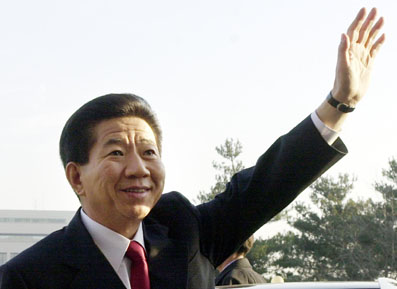
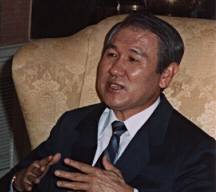
Roh Moo Hyun or Roh Tae Woo?


The Korea Herald ran an article discussing the tightening of restrictions by the Roh administration on government think tank workers. It highlights the case of Kim Tae Woo of KIDA, who was apparently punished for talking to South Korean domestic media. The contention is that the Roh administration will brook no opposition to its views in public.

This is not a new phenomenon. More than a year ago, a few associates at Korean think tanks let me know quietly that they were under pressure not to talk to me or any other foreigners who may disseminate their comments. For a while I was able to maintain a flow of information through one of their colleagues who was temporarily in America for continuing education, but even that avenue was closed off. Now it is apparent that they were not exaggerating, and that even comments to the domestic media are taboo.

Now, I must admit that I have developed some sympathies for the modern pan-Korean nationalist movement, despite its occasional naivete. However, from an observational standpoint, it is interesting (if not troubling) to see the evolution of the former pro-democracy opposition in South Korea evolve to deploying the very tactics it so long decried. I will slip from my normal objectivity (or at least attempted objectivity) and allow my emotions to weigh in on this one.

First, the Roh administration has targeted South Korean media from the start. Now, this is in part the legacy of the pro-democracy movement. It was said there were three things that needed conquered to truly overcome the entrenched Korean regimes; the military, the Chaebol and the media. The military was defanged with the end of the Chun and Roh administrations, even if Kim Young Sam was largely a legacy of the previous regimes, rather than one of the staunch opposition reformers. The Chaebol were largely defanged under Kim Dae Jung in the aftermath of the Asian economic crisis. The media have been Roh's target. But his methods have been largely ineffectual. He has been unable ton bully the media into submission, nor bribe them into compliance. For the most part, their ties remain tied to the old regimes.

In cracking down on dissent or alternative views from the think tanks (and likely academia as well), Roh is simply applying a different tactic in his campaign against the media - cut their sources of information. This hasn't not worked either, and risks cutting off vital sources of alternative viewpoints so necessary if Korea is to develop further into a modern democratic nation. To see then tools of repression wielded so lightly by someone who proclaims a connection to the reform movement is disconcerting. During the Korean War, the South Koreans, upon reclaiming territory occupied by the North, used nearly the same tactics to pursue their anti-Communist agenda as the North Koreans had used to "cleanse" the population of the bourgeoisie. The ideology may have been opposite, but the methods of oppression and brutality were mirror images. One would hope that, around the anniversary of the start of the Korean War, this lesson could be remembered.

Whether in the name of national security or nationalistic reform, authoritarianism is authoritarianism. It may be an effective management tool, but rarely for long. And in the end, whether you are Park Chung Hee building a powerful heavy industry based Korean economy or Roh Moo Hyun seeking a more independent foreign policy and reunification by peaceful means, crushing all voices of dissent will only strengthen the opposition. The Kwangju massacre didn't crush dissent, it contributed to the eventual breaking of the Chun-Roh regime.

It may be time for the current President Roh to compare the short and long term risks and benefits of stifling alternative voices, or allowing dissent and dialogue to flourish.

26 June 2006

Kim Shows Up Again

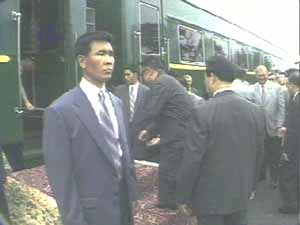
Laying to rest whatever speculation remained of a trip to Russia, Kim Jong Il made an appearance June 25 (the anniversary of the Korean War), watching a Russian musical performance with DPRK troops on the "frontline." (All of Kim's 2006 appearances listed at Where Is Kim Jong Il 2006.)

There were mass anti-American rallies in Pyongyang the same day, but apparently Kim decided it was more appropriate to spend the days entertaining he troops. One thing that cannot be forgotten is that North Koreans remain convinced that they are eternally on the brink of war with the United States, so things thatn seem odd abroad are perfectly normal and understandable inside North Korea.

24 June 2006

Korea-Switzerland

It ends 0-2, I shed a tear, and look toward 2010.

75ish min: That was the bad call that will be remembered for setting off all the riots that will insue if Korea loses. That was just an aweful call to allow that goal to remain.

63 min: Oh Corea! What an effective goalpost!

Half Time: Time for another famous Korean second half!

33 min: OK, dont they listen??? Another free kick for the Swiss???
*WHEW!!!* Missed.

22 min: Switzerland draws first blood. This is getting redundant. But this game is more exciting, much more offense by both teams. Korea cannot afford to give away another penalty kick, though.

23 June 2006

Korea-Switzerland - Tensions Mount

OK, this is the do-or-die game. Or games.
BBC has a very cler (as mud) explanation of the possibilities for Korea to move on.

A draw with South Korea will be sufficient for Switzerland to progress to the second round.
If France fail to beat Togo, both Switzerland and South Korea qualify for the last 16. If France beat Togo by at least two goals and South Korea do not beat Switzerland, the Koreans are eliminated. If France beat Togo by a one goal margin and South Korea draw with Switzerland, the tiebreaker 'goals scored' becomes decisive for France and South Korea.

Gonna Launch?

Russia is denying Kim Jong Il has crossed the border. Kim's June 22 military visit was to an area that was "mountanious," suggesting he is in the north part of the country. Perhaps he is heading to Musudan-ri to watch the launch. Maybe they can launch during the Korea/Switzerland game for maximum airplay...

Kim Skips Town?

***
South Korea's Chosun Ilbo is citing "eyewitness" reports that Kim Jong Il's personal train may have crossed the border into Russia. The reports come a day after North Korean Ambassador to Russia Pak Ui Chun was summoned to the Russian Foreign Ministry to hear Moscow's concerns over the reports of a possible North Korean missile launch. It also follows a report that Kim Jong Il on June 22 inspected a sub-unit of KPA Unit 715 "after crossing steep mountains." It is this descriptor that is particularly interesting, as it suggests the military base is in the northern part of North Korea, thus lending some potential support to the idea that he then took his train out through the northeast border crossing.

Now, there is a real question as to why Kim would leave the country at this time. He is in the midst of a psychological crisis with the world, as the Taepodong-2 sits on the launch pad at Musudan-ri. Leaving the country would seem to imply that he is either supremely confident that nothing is going to happen or he is extremely concerned that something is going to happen and he desperately needs a personal consultation. Obviously these are widely different conclusions, and raising both seems to do little to solve the mystery.

Kim rarely announces foreign travel before he leaves (an exception was his August 2002 trip to Russia, which was leaked before he left), so again, the lack of prior warning is not unusual. But the real question is why Russia? It would seem that perhaps a visit to his closer (both geographically and economically) neighbor China may be in order, as Beijing appears the country with the most to gain from a North Korean "crisis" at this time. So this Russia trip just seems a bit odd.

Now, rumors abound all the time, so it may be nothing, but this bears watching. There are reports that in 1999 Kim left his Taepodong out for some 50 days before packing it up and putting it away – and announcing a moratorium on missile tests. But the hype back then wasn't as great as it is now. Backing down seems out of character, but launching and failing is also undesirable. But back to the question at hand, one wonders why the dear leader would leave his country at a critical time. Either this story is nothing more than an overzealous "source" looking for a scoop in the Chosun Ilbo, or some seriously strange machinations are going on.

***Picture is from Kim's last trip to Russia via train.

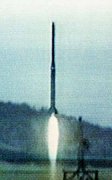
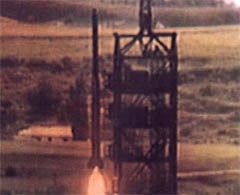
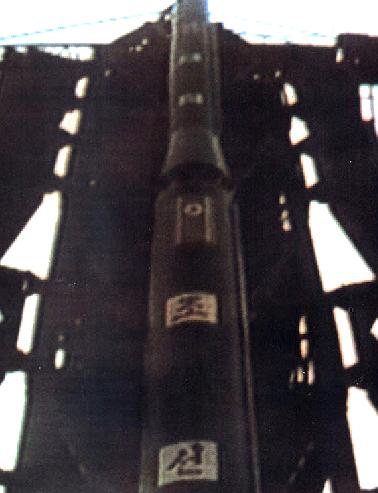
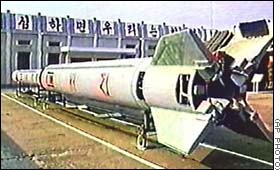
Taepodong Pics From Assorted Sources

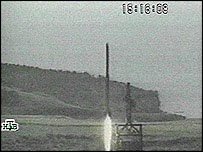
1998 Launch


Mock-up

20 June 2006

The Missile is on the Platform, But Where is Kim?


As everyone waits to see if North Korea is just playing with the spy satellites or really planning on launching, it may be instructive (or not) to look at his actions prior to the 1998 launch and now.

In 1998, as Kim was preparing to more formally take power in September, he made frequent visits throughout the country in the first six months of the year. Then came July, and Kim made just three public appearances; once to Kumsusan Memorial Palace to mark the fourth anniversary of the death of Kim Il Sung, once to inspect KPA Unit 671 and vote in the Supreme People's Assembly (SPA) elections, and once to see a performance marking the 45th anniversary of the Great Fatherland Liberation War (Korean War). In August he made just one appearance, on the third, to inspect KPA Unit 549. Then nothing until after the August 31 Taepodong launch.

This year, the situation is quite different. In May, Kim made 17 public appearances, and has already made 11 through June 19. In May, Kim made nine inspection trips to KPA units, saw five art performances, visited a pig farm and the new Pyongyang Conservatory and met with former Cambodian King Norodom Sihanouk. In June, Kim has carried out nine inspections of KPA units, visited a machine plant, and saw one art performance (June 19). Kim has been much more visible this time around.

It may mean nothing. Then again, it may signify he is much more confident this time around, or much more secure in his power. Whether he launches or not, he has certainly brought additional attention to his regime, and managed to reiterate his ability to shift the focus of the world. Good or bad, the little man can still fill the box office.

19 June 2006

Korea-France

1-1 Final. So Korea retains the chance to move on.
For those who were criticizing Korea for celebrating the match against Togo, this match at least showed Korea could play (at least in the second half, we wont talk about that first half).


GOOOOOOOOOAAAAAAAAALLLLLLLL!!!!!!!!!
1-1 Korea ties it up!


Half Time: still 0-1 in favor of France. At times it is like watching the highschool team play the elementary school team. Korea just hasnt been passing well. But second half is redemption time.


Ok, so Togo scored first and Korea still won.
France may have drawn first blood (9th minute), but it isnt over yet.

16 June 2006

To Launch or Not to Launch...


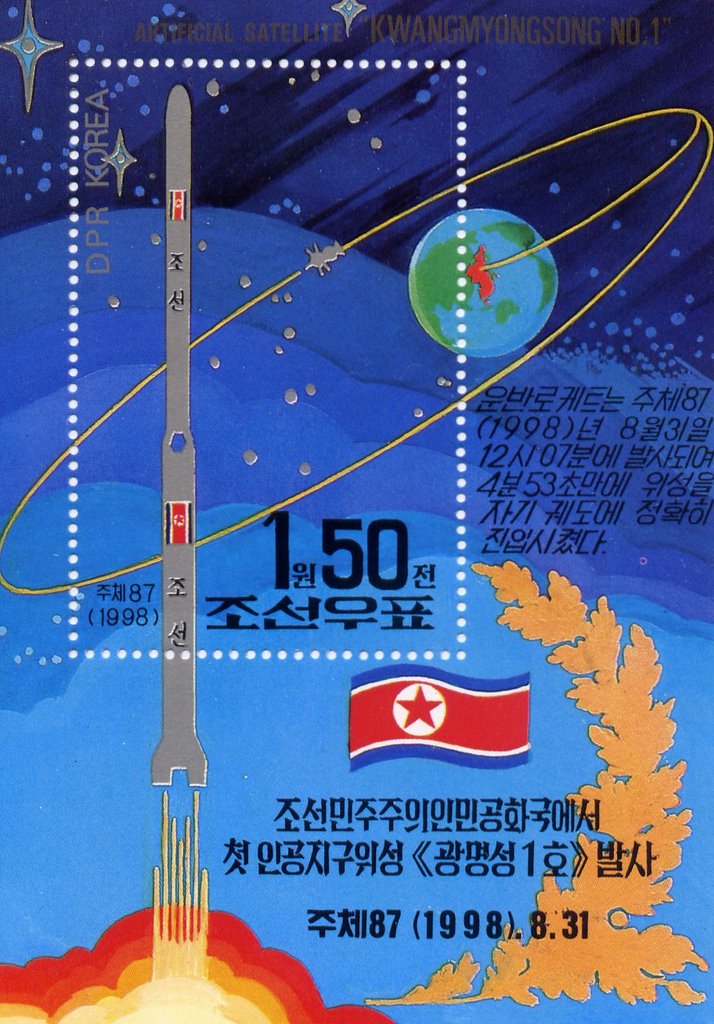
The small nub of land in North Korea's South Hamkyong province, known as Musudan-ri, has once again become the center of attention for the United States, South Korea, Japan, China, Russia and anyone else with a decent satellite. North Korea has been increasing activity at the sight of its 1998 launch of the Taepodong 1, carrying a small satellite that failed to achieve proper orbit.

Whether this new (and very visible) is a sign of an imminent test of the Taepodong 2 (believed capable of reaching Alaska or beyond in a ballistic missile configuration) or simply Pyongyang manipulating the fact that there are frequent eyes in the sky looking down on the peninsula (as Pyongyang did before with one of its nuclear facilities, creating the sense of a crisis and finally letting inspectors into what turned out to be an empty shell of a building) is now the subject of intense speculation.

If North Korea does carry out another Taepodong test, it will be the first since the August 1998 Taepodong 1 launch and the first since Pyongyang declared a self-imposed moratorium on long-range missile tests 1999, and reiterated its commitment to refrain from testing during a European visit in May 2001. In October, 2004, North Korea carried out a ground test of the Taepodong 2 engine, and in March 2005 Pyongyang declared that it was no longer bound by its moratorium, as "Dialogue between the U.S. and North Korea has been completely blocked since Bush took office in 2001."

North Korea uses threats of a new missile launch as an attention-getting device, little different than a naughty schoolchild placing a tack on their teacher's seat. Once attention is gained, Pyongyang than negotiates away the threat of imminent action in return for some benefit. Thus it inflates an imaginary crisis, and gets paid off for returning to the status quo. At the moment, Pyongyang is using the Taepodong 2 as lure to draw Washington back into the six party talks - Pyongyang will refrain from another rocket launch as long as Washington returns to the negotiating table with no preconditions and begins giving North Korea economic benefits and security assurances before Pyongyang dismantles its nuclear program. This is obviously a non-starter from Washington's point of view.

But Pyongyang has other plans in mind as well. One key thing Pyongyang is doing is testing Seoul's resolve. South Korea has already intimated that a North Korean missile test, while undesirable, would not jeopardize inter-Korean economic cooperation. Such a policy will not only stir massive infighting amongst the South Korean political parties, it will also contribute to a further division of the U.S.-South Korean paths regarding North Korea. This, for Pyongyang, is a positive thing. Keeping Washington and Seoul divided gives North Korea greater leverage and maintains the flow of economic benefits while not having to capitulate to U.S. demands.

Concurrently, a new missile launch would also trigger a response from Japan. First, it would test Tokyo's resolve to treat a North Korean launch as a military threat. Japanese officials have suggested that they view it an act of self-defense to carry out a pre-emptive strike on North Korean missile facilities if they perceive an imminent North Korean launch aimed at Japan. While the Taepodong would necessarily be launched at Japan (North Korea's many more Nodong missiles a re much better suited for a Japanese strike), the 1998 Taepodong satellite launch still over flew Japanese territory, and an accident or error could sends tons of failing rocket hurtling down on Japan.

But even if Japan did not immediately respond, it would certainly throw weight behind those in Japan advocating a complete break from the post-World War II pacifist stance and instead build a strong and active military, rather than a restricted Self-Defense Force. With the ruling Liberal Democratic Party (LDP) gearing up for the retirement of Prime Minister Junichiro Koizumi, Japan's next PM could easily be a more overt "hawk" coming on the heels of a North Korean missile launch.

This, in turn, would increase tensions between Japan and South Korea, as Seoul would perceive a threat not only from a Japan-North Korea clash but from a generally resurgent military Japan. And that, in a way, would draw South Korean and North Korean interests even closer, as both have a common distrust of Japanese intents. In addition, a rapidly re-militarized Japan (perhaps a misleading term, as Japan is currently one of the most technologically capable defense forces in Northeast Asia) would trigger a Chinese response. Tensions between Beijing and Tokyo over mutually-claimed territory in the East China Sea continues to simmer, and both Japan and China compete for the same sources of energy along the same supply routes.

For North Korea, then, the missile test - or rumors thereof - can serve many purposes. Whether a final decision to launch or not has been made remains the key mystery. However, one thing that may well play into the calculation is the weather. The monsoon season starts in Korea in the middle of next week, and the areas around Musudan-ri are already overcast. While it is certainly possible to launch through the clouds or even in the rain, North Korea needs a picture-perfect launch, and cannot have any additional risks for failure. A sunny, cloudless day seems the most likely for a launch, and Mother Nature does not seem ready to cooperate.

13 June 2006

GOOOOAAAALLLL!!!!!

2-1 Korea

GOOOOOAAAAALLLLL!!!!!

1-1

... Togo strikes first ...

OK, no problem, still an hour to go.

Cultural Identity Theft

I caught myself today driving down the road in my pick-up blasting "Oh Corea," "Reds, Let's Go Together," and that rock version of the Korean National Anthem, all in anxious anticipation of the Korea-Togo game which, as I write, is less than 10 hours away. Before the U.S.-Czech game, however, I did not drive around blasting the "Star Spangled Banner" or "America the Beautiful," or even "We Are the Champions." I was interested in the game (disappointing though it was), but my anxieties were mute compared to the tight feeling in my chest as that Korea-Togo match nears.

Now, as I have made clear before, I am not a Korean. These days, I don't even live there anymore. Yet I was rooting for the Ahn Hyun Soo and Lee Ho Suk at Turin, and picking out the personality faults of Apolo Anton Ohno. My heart was pumping as fast as the short track skaters on the ice. And in 2002 I proudly walked around in my "Be the Reds" T-shirt, getting up at ridiculous hours, squinting through the static on a poorly received Univision and making my brother with cable record the Korea games so I wouldn't miss a kick.

But driving home today, in the Texas heat, it really struck me. I am a thief. I have stolen a cultural identity, absconded with a nationalism that I have no right to claim. OK, that I have no blood-right to claim, but the idea is the same. I have, at certain times, taken on a nationalism that I am not a part of, that is half a world away, and that has nothing to do with my ancestry (though at least my son can claim half Korean ancestry). And it is not just me. I have seen it in others, particularly in the English teachers and other short-term expats who live or lived in Korea for only a few years. While many remain in some way connected to the peninsula, a few, like myself, somehow adopt some of the more extreme nationalist characteristics.

I call it the "East Sea." I know Tokdo is "our land." (I even have three or four versions of the song on MP3). I am incensed by the Japanese Prime Minister's visits to the Yasukuni shrine. I cheered at the launching of the LPX Tokdo and the new 1800-ton 214 class submarine, the Sohn Won Il. I am particularly proud that Korea has beaten Japan to the waters with the coastal helicopter carrier program (LPX). I can understand the logic that the U.S. military alliance, the presence in Yongsan in downtown Seoul, and the CFC structure all feel like occupation rather than alliance. (I may not entirely agree, but I can certainly understand the logic train). When I greet someone older than me, I even touch my sleeve...

So what is it that has driven me to steal someone else's culture, to defend it and root for it, more so than I do of my own?

In part, it is because I am so complacent in America that I don't feel the need or desire to have a raging sense of nationalism at home. I certainly wouldn't turn my back on America, and if called to do so I would readily defend it, but America is pretty much the single power in the world, and as such it is easy to be complacent. There is little to prove (and if anything, we often find ourselves proving we aren't as bad as other people think). We are a supremely confident nation, one with plenty of noisy internal bickering, numerous external conflicts, but no real peer challenger.

PC niceties aside, we are the Champions of the Cold War, of the World. It may not last forever, and other global powers have declined once they have grown too confident and comfortable, but for now, there is nothing on the horizon to threaten America than itself.

Korea is another story altogether. It has a bipolar history of significant domestic achievements (printing presses, celadon pottery, economic booms, technological advances) interspersed with periods of deep decline, usually at the hands of external forces. It is tragedy and triumph, braided with a keen sense of cultural identity, all forming the strand of history that the present hangs from, strangling and supporting, binding and bruising. Korea is the classic American fairy tale. Rising phoenix-like from the ashes, over and over again, boot strapping its way from decimation to innovation, always trying to rely on itself. This is a story not just of South Korea, but of the North as well. Both are more Korean than whatever political ideology they have chosen.

And this is ultimately appealing. Living in Korea in the 1990s, before Kim Dae Jung was even elected, and living in Kwangju of all places, there was a pervasive sense of pride, nationalism and patriotism. And persecution. And determination. And superiority. In short, there was a Korean identity that one sees rising up at various times, triggered by troubles, perceived injustices or new opportunities.

In the midst of the Asian economic crisis, the Koreans pulled together, ate Korean food over McDonalds or other imports, and sold so much gold after a government request that they impacted world prices. After the two schoolgirls were tragically killed by a U.S. military vehicle, Koreans staged rallies, candle-light vigils and even occasionally kidnapped Americans to teach them what they had "done wrong." When the World Cup was in Korea, there was a mass of red everywhere, a burning pride that bordered on hysteria. And it drove the Korean team to exceed all expectations.

This is catching. This is intoxicating. This is irresistible. At least for me. There are others, I know, who find all of this Korean behavior odd at best, detestable at worst. I do not begrudge them. But for me, I have been bitten, been infected, and will never recover. It is more than empathy. At times it is more "Korean" than many Koreans I know (some find it humorous, others exhibit a certain nationalistic jealousy). I know I am not alone, and I bet it is a phenomenon found not only in relation to Korea but to other places as well. But as the clock ticks down and the Togo match nears, my throat constricts, my breathing quickens, and I find myself wanting to shout DaeHan MinGuk! If we win, I will cheer, if we lose, I will slip into that optimism that simply looks to the next match, but deep down I will shed a tear as our national pride takes a hit. And at least I have until June 30 at the earliest before I have to worry about that internal conflict of a USA-Korea match.