21 September 2006

Elder China Offers Sage-Like Advice to Younger DPRK


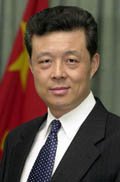
China's new ambassador to North Korea, Liu Xiaoming, made the rounds in Pyongyang September 19, meeting with DPRK Premier Pak Pong Ju, Vice Premiers Kwak Pom Gi and Ro Tu Chol, Minister of Foreign Trade Rim Kyong Man, Secretaries of the Central Committee of the WPK Choe Thae Bok and Kim Ki Nam, and several others. The visits followed Liu's introductions in the DPRK September 11, when he met with Kim Yong Nam, President of the Presidium of the SPA.

Liu's arrival comes as Beijing and Pyongyang ties have been strained since before the July 5 missile tests. But Beijing has been making moves to shore up its influence in Pyongyang. On September 14, the Chinese Foreign Ministry said it was not altering the Treaty of Friendship, Cooperation and Mutual Assistance with North Korea, and north Korea reported September 20 that "The government of China provided the DPRK with aid materials including food and diesel fuel in connection with flood damage," resuming aid that has been sparse (if existent at all) since July.

But Liu himself is the most interesting thing here. Liu was born in Shenyang City, Liaoning province in 1956 - three years after the end of the Korean War. He is the first Chinese Ambassador to Pyongyang born after the cessation of hostilities between the two Koreas. This means Liu is not of the generation that knows the meaning of an alliance "sealed in blood," nor really of the significance of "lips and teeth."

Adding to this, Liu is not even someone who knows much about North Korea. Liu started in the Ministry of Foreign Affairs in 1974, coming out of Dalian Universtiy of Foreign Languages. His first posting was as a staff member of the embassy in Zambia from 1975 to 1978. Upon returning to China, he moved into the Department of North America and Oceania Affairs until 1989, though while working at the ministry he got his masters degree from Tufts University, Fletcher School of Law and Foreign Affairs in 1983.

In 1989, Liu was posted to the Chinese Embassy in Washington D.C., where he rose through the ranks to become First Secretary from 1990 through 1993 - a time when China was redefining its international relations in the wake of the Tiananmen Square incident. From 1993 to 1998, Liu returned to the Department of North America and Oceania Affairs, only to return to the Embassy in Washington from 1998 to 2001 as Minister Plenipotentiary. From there, Liu transferred to Egypt, where he served as Chinese Ambassador until 2004.

He then returned to China for a two-year stint as Assistant Governor and Deputy Secretary-General of the people's Government of Gansu Province (the province where current Chinese president u Jintao got his start in the 1970s and 1980s). Liu was then appointed Ambassador to the DPRK - despite his almost exclusive focus on Chinese relations with the United States during his career.

But this in itself is the reason Liu was sent. It seems China thinks North Korea is doing a bad job of reading the united States, and is sending an Ambassador who isn't there to reassure Pyongyang of the blood-ties, but instead to advise the North Korean government on a more tactful and appropriate approach to international relations. Whether Pyongyang listens, however, we have yet to see. But China may be through with the heavy-handed tactics or the acquiescence to North Korean whims, and instead is now taking the role of elder brother or scholar, and gently advising the North Korean regime.

15 September 2006

A Pent Up Rant

The October 2006 edition of The Atlantic has an article by Robert Kaplan called The Menace of North Korea. It is, overall, a fear-mongering piece, reminiscent of the conversations I had at Yongsan (and apparently inspired by similar comments Kaplan had). While it is perhaps an interesting read, it has several lapses of logic, and is colored by those at Yongsan who have a vested interest in maintaining the sense of fear and imminent crisis surrounding the dread North Korea for half a century.

A few points in particular seem stretches of logic (or merely circumventions of logic...).

"...North Korea's potential for anarchy is equal to that of Iraq..."

This seems to miss a fundamental difference between the social make-up of Iraq and that of North Korea. Kaplan presages the comment with a reference to the potential for "widespread lawlessness" compounded by "guerilla mentality" of the armed forces and the flow of refuges should the regime fall. But this is a far cry from the situation in Iraq. While North Korea does intend to rely on guerilla tactics should there be a military conflict (and the North Korean bunker system will make Hezbollah’s southern Lebanon bunkers look like holes dug by kids in the sandbox), the "anarchy" in Iraq is not due to the guerilla nature of the former Baathists per say, but to the ethnic and religious divisions and the historical animosities among these factions due to years of minority Sunni domination over the Shia and Kurds. Even within these warring ethnic and sectarian forces there are varying competing factions, and the imposed outside influences of the United States, Saudi Arabia, Iran and Turkey. But North Korea's relatively homogenous society does not have the ethnic or religious fault lines (though there are fault lines among the varying degrees of political "reliability" and between the various economic levels). But fundamentally, Iraq is riven by deeper divisions than North Korea, and well there may be chaos, it will not be along the lines of the Iraqi internal conflicts.

"The United States has a history of underestimating historical-ethnic disputes: in the 1980s, it paid insufficient attention to ethnic tensions in Yugoslavia; more recently, it downplayed Sunni-Shiite tensions in Iraq. It should not make the same mistake in Asia."


This comment is in relation to the potential for war between a reunified Korea and Japan. Now first, there is here, in the reference to the Shia-Sunni split, a recognition that the earlier comparison of North Korea to Iraq is misleading at best. But aside from that, while I agree there will be higher tensions and even the possibility of war between a unified Korea and Japan, there are clear geographical differences between the examples – Yugoslavia and Iraq – and the Korea-Japan dynamic. First and foremost, in the cases of Yugoslavia and Iraq, there is a shared geographical space for competing ethnic and sectarian groups. In the Korea-Japan dynamic, the two occupy distinct geographical spaces, and while there is the dispute over Tokdo, the islet is far from either shore. Iraqi and Yugoslav conflicts were the result of centuries of frictions between competing interests vying for the same space, of groups liberated from an oppressive power, seeking revenge for perceived (or real) injustices of the past, all on territory they both claimed. A better example would be if the reunified Germany attacked France or Poland – or the Soviet Union. As is, the current comparison misuses common examples and ignores geopolitical realities of the territories in question to raise the specter of a conflict that may be possible, but is not comparable to the examples.

And yes, this may all be picking nits, but what else am I to do in my free time. And more importantly, if one wants to make an argument for trouble should North Korea collapse, there are many solid trains of logic that can be followed, rather than making simple and inaccurate comparisons in a manner that would garner poor grades in a history or poli-sci class.

The fear of the "Korean left" is also rather overblown and misrepresented, but perfectly mirrors the words of those behind the high walls of Yongsan garrison. In a potential war scenario, Kaplan suggests the "South Korean left – which has been made powerful by an intrusively large American troop presence and by decades of manipulation by the North" would join with the "the United Nations and the global media" to blame the United States for attacking North Korea, and thereby halt any military action and prop up North Korea with economic rewards. This is one of those "Team America" scenarios, where liberal media, intentionally or not, cooperates with North Korea's plans. But the reference to the South Korean left is particularly interesting, as it is a very shallow and misleading read of the "anti-Americanism" and "leftism" in South Korea. The core of the "left leaning" tendencies in South Korea are neither caused by the U.S. military presence or the machinations of the puppet-master Kim Jong Il, but do to the traditional nature of Korea. After the Japanese were booted in 1945, much of South Korea was heading Left as fast as the North. It fit the formerly agrarian repressed society quite well. But even the North’s "left" was and is always more "Korean" than "Communist." But this topic could take chapters to further expound on, and would also need to address why the South Korean left never fulfilled Pyongyang's expectations with a rising in 1950.

Overall, though, what got me about the Kaplan article was the sheer disdain it exudes toward both North and South Korea, and even toward the very peninsula on which the divided nation sits. From the initial smug use of "KFR" (Kim Family Regime) to refer to North Korea to parenthetical (and gratuitous) comment that the tallest Korean soldiers on both sides of the line in Panmunjom are "short by American standards" to the criticism of the "lousy" weather on the Peninsula. It all read as if Kaplan, or those he interviewed, simply expressed all the worst stereotypes of life in Korea as seen from someone intentionally isolated, unwilling to be there, and generally ornery at all things not whatever state they were originally from. This outside disdain, this sense that the unfamiliar is automatically inferior, that alternative viewpoints and perspectives, cultural norms of a different color, are automatically sub-standard, is what convinces people around the world that Americans are smug idiots. As was once told to an aspiring Spiderman – with great power comes great responsibility. The United States is a great power, not only is size and strength, but in underlying ideals, morals and social structures. But there is a responsibility not to simply let that power turn into a bludgeon, not to let that sense of power blind one to the fact that there are differing perspectives that may be just as "right" ... at least from the interests and background of the people involved. South Korea has different views of the strategic landscape. So does North Korea. That is natural. The United States has its own views, and that is natural. These views come into conflict, and each side will do what they see best to maintain their own views. That is natural. If their views are different, they are our enemy. If they match, they are our ally. But underestimating them by heaping disdain on their views, motivations or perceived weaknesses will be what truly leads the United States into trouble.

11 September 2006

Five Years On


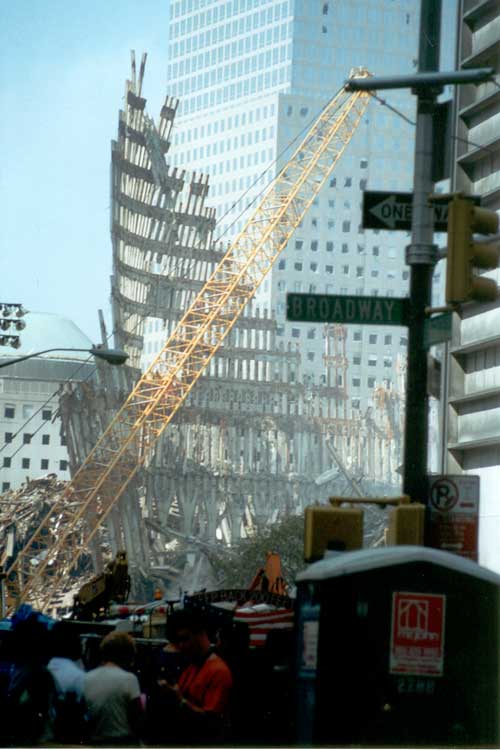
Unrelated to the regular content, but given the date, here are the three pages I created back in 2001 after visiting DC and NYC.
Page 1 Visit to the World Trade Center, Sept. 22, 2001
Page 2 Nearby the WTC
Page 3 The Living Memorial to the WTC

05 September 2006

CFC Changes - Anti-Americanism or Inevitable Reality?

I have a friend who is about to enter military service in Korea. He has spent much of his youth in American boarding schools and college, and now must do his civic duty. As the days are x-ed off his calendar, he is apparently becoming more and more interested in the events surrounding the Korean military, and has raised his concerns with the transfer of wartime command to the Koreans from the Americans. His questions and comments are filled with concerns about the deterioration of the U.S.-ROK relationship, about throwing away Korean money to buy American war-goods, about the complete U.S. withdrawal from Korea and, in time of a war between the U.S. and China, the abandonment of Korea by the Americans, with Japan being the primary U.S. forward line of defense.

Much of the discussion of the change in operational command has followed similar lines. There are those who argue that the U.S. control of the Korean military at times of war is a clear violation of South Korean sovereignty – after all, how can a nation claim to be sovereign if it cannot control its own military? Even in Iraq Washington is preparing to transfer operational control of the military over to the Iraqi government, even though the government is barely viable and the Iraqi security forces are even less so. Yet more than fifty years after the end of the Korean War, Washington retains the Combined Forces Command (CFC) structure in Korea.

The CFC served several purposes through history. At first, it was clear that the Korean military, in the wake of the Korean War, was clearly unable to defend itself should North Korea launch a second attack. In addition, despite some well fought battles by specific South Korean units, the overall impression among U.S. military planners was that the South Korean military had proven weak, incoherent and ultimately ineffective during the Korean War. If Washington were to have to intervene again on the peninsula, it wanted to have immediate control over the placement and actions of its on-the-ground ally.

Over time, the CFC's purpose evolved. As the Cold War rolled along, the CFC allowed Washington to view the Korean military as an auxiliary, right along the front lines with communist Chinese and Russian influence, and could utilize those forces should any larger conflict with Moscow or Beijing break out. As the South Korean government changed, and people like Park Chung Hee came to power, the CFC structure served less as a check on Soviet and Chinese designs and more as a restraint on South Korean adventurism. Many of the restrictive military agreements with the South were intended to keep the South Koreans from rolling north and triggering a war Washington had little desire to enter.

With the end of the Cold war, however, the CFC became even more of an anomaly than it was previously. Without the Soviet challenge, with a China bent on economic ties rather than ideological or military conquest, Washington's control of the Korean military became a relic of convenience, rather than one of strategic necessity. This is one of the realities that current South Korean President Roh Moo Hyun noted even before taking office, and many of his early speeches revolved around the need for South Korea to prepare an independent defense posture. While much of this was seen as Roh's excessive nationalism or anti-Americanism, it may well have been more a realization of the inevitable than a desire to change the status quo.

U.S. interest in the Koreas fell precipitously following the end of the Cold War. This is why North Korea decided to begin a series of managed nuclear crises – to make itself remain a significant center of attention and thus retain the aid and support of its neighbors. For South Korea, as for neighboring Japan, the sudden disappearance of the Soviet Union, the creation of the anomalous uni-polar world, left Seoul and Tokyo facing a very new reality. No longer did Washington absolutely need South Korea or Japan, and the two nations quickly found that their own national interests – be they economic, political or security related – did not always match U.S. interests, and without the need to bottle up Communisms' spread in East Asia, the united States would be more selective in its protection of Korean or Japanese national interests.

Both South Korea and Japan have, thus, launched on major military overhauls, though Seoul has been the late comer to the game. The reversion of operational control during wartime is just one part of this shifting reality. Washington is just as happy to abandon the arrangement as Seoul, though U.S. military officials at Yongsan, who have made a career out of preparing for the North Korean threat, are less than happy to see the arrangement – and potentially their livelihood, end. And in Seoul, former defense ministers and military officials have come out opposing the rapid transfer of command, as the South Korean military is neither equipped nor trained for its own independent defense... yet.

Whether now, or 2009, or 2012 or later is better or worse, the change is coming. A significant drawdown of U.S. forces in Korea is coming (and has in some respects already begun). If Washington goes to war with Beijing, the battle is not one that will benefit from U.S. troops on the ground – China has too many people to make an invasion viable, even if the supply lines could be kept operational. Korea serves as a training ground for u.s. forces, and as a location for the deployment of rapid reaction forces throughout the region. It is not the frontline bastion against Chinese aggression. As was seen in June 1950, the Peninsula is barely defensible and the supply lines by sea would be rather tenuous at best (these very supply lines are what Yi Sun Shin cut, thus ending the Hidyoshi invasion of Korea centuries ago).

So, is it good or bad that the CFC is being dissolved? Does it matter? The question should not be one of good or bad, but one of how Korea prepares itself for this inevitable reality. Washington is ready to move on, Korea is not yet prepared. It has only now launched its first imaging spy satellite, it still lacks a strategic deterrent, or the capability to strike back at much of North Korea. And Seoul must look beyond building a military aimed solely at defense against North Korean invasions – the minnow remains between two whales.

A properly designed military improvement program could prove a boon to Korean technology and manufacturing – already her big chaebol have their defense production arms. But it will cost money. A lot of money. And it may even require the overhaul of the Korean military system, away from a conscription military and toward the creation of a professional military. One thing is certain, the shape of U.S.-Korean relations is changing, and the military relationship is simply the most obvious. But it is not a normal situation for a sovereign nation to give up control of its own armed forces to another nation, except due to conquest, and Washington's shifting plan for the Pacific no longer needed massive captive forces in Korea. The CFC was on its way out (even if Seoul hadn't asked for it).