31 January 2006

Changes in the Wind?

87,028 South Koreans visited North Korea in 2005, not counting the 298,247 South Koreans who visited the mount Kumgang tourist resort in the same year, according to a recent report from the Ministry of Unification. In 2004, non-Kumgang-bound South Koreans heading North numbered 26,213, in 2003 it stood at 15,280, and back in 1997 it was just 1,015.

In 2005, then, a total of 385,275 South Koreans, or nearly 0.9 percent of the population, visited North Korea. In some senses this is a tiny number, but in others this is massive. North Korea is no longer the evil ever-present danger just across the heavily fortified (and obviously mis-named) Demilitarized Zone. It is, instead, a destination for tourism. Whether this is due to a nostalgia for the ancestral homeland, a sense of flaunting leftist values or simply the excitement of visiting the evil twin Korea, Southerners are heading North.

For Pyongyang, this is a significant development. First and foremost, it means cash. Cash from Hyundai for running Kumgang, cash from tourist dollars, cash from the bus trips into Pyongyang, cash from souvenir hunters (I have seen these South Korean tourists buy up every copy of North Korean cartoon videos, "pop" music and books)... in general it brings money (so Pyongyang can print fewer U.S. hundred dollar bills perhaps?).

But it also helps to bring about the change in attitude in the South. Just as Kim Jong Il's appearance at the airport to meet then President Kim Dae Jung on his 2000 visit to Pyongyang, and the Northern leader's very obvious deference to his elder, the tours to the North alter the impression of the nation. Rather than being an unknown (and therefore feared) entity, it becomes seen and known. Having been there, there is an unavoidable sense of sympathy for the people that builds during the visit. It comes from observation of the buildings, the populace, the general mood of the place.

And this is something Pyongyang loves. It stirs confusion in the South between the formerly entrenched conservative political forces and the liberal voices. It creates a sense of brotherly desire - and duty - to help, to protect, and to bring back into the family fold. And this adds to the rift between Seoul and Washington, creating tensions that offer Pyongyang even more maneuvering room internationally.

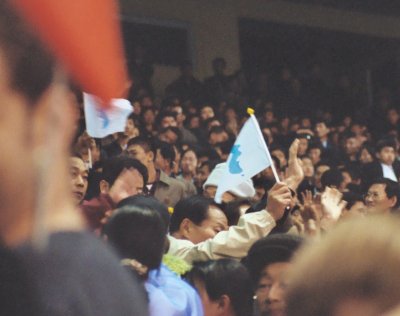
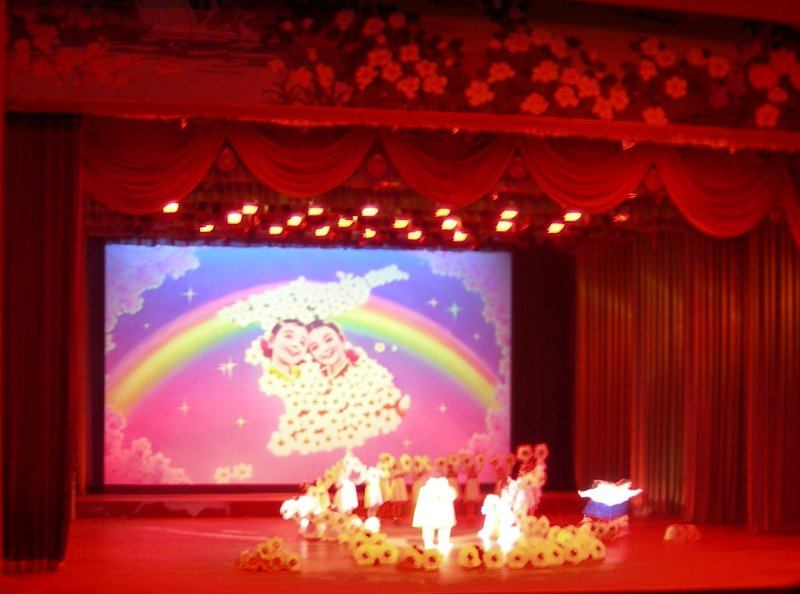
In the end, though, Pyongyang will find that it also exposes the north to South Koreans, no matter how carefully controlled and monitored the visitors may be. There are opportunities for observation, the occasional short exchange of glances, or even of words. It isn't subversive, just revealing. But the more revealing it becomes, the more difficult Pyongyang will find maintaining the image. Already the North's leadership has swapped propaganda signs to show a single, happy, unified Korea, one seen often portrayed with flowers and smiling children's faces.

The more the image of an evil South dissipates, however, the harder Pyongyang will find it to maintain the sense of embattlement and "unfair" international isolation that keeps the regime in control. Add in the new openness to U.S. tourists (same reasons as mentioned earlier from Pyongyang's perspective) and the hold grows more tenuous.

Personal exchanges offer a way to break down barriers, to remove some of the misunderstandings between cultures and peoples and to separate the regime or "idea" of a nation from its people. Right or wrong, good or bad, it is starting to happen. The isolation bubble is slowly being penetrated - in both directions. Whether the immunity remains, the North adapts to the outside world, or a raging epidemic takes hold remains to be seen.

But the change is coming. Pyongyang still has time to draw back into its shell, but the international support mechanisms (Russia, China) are no longer as readily amenable to facilitating Pyongyang's isolation. Not today, not tomorrow, but there is a rumble, the signs of decay are evident even in Pyongyang, and change may not wait for Kim to get around to transferring power to a chosen successor.

27 January 2006

Can't We All Just Be Friends?


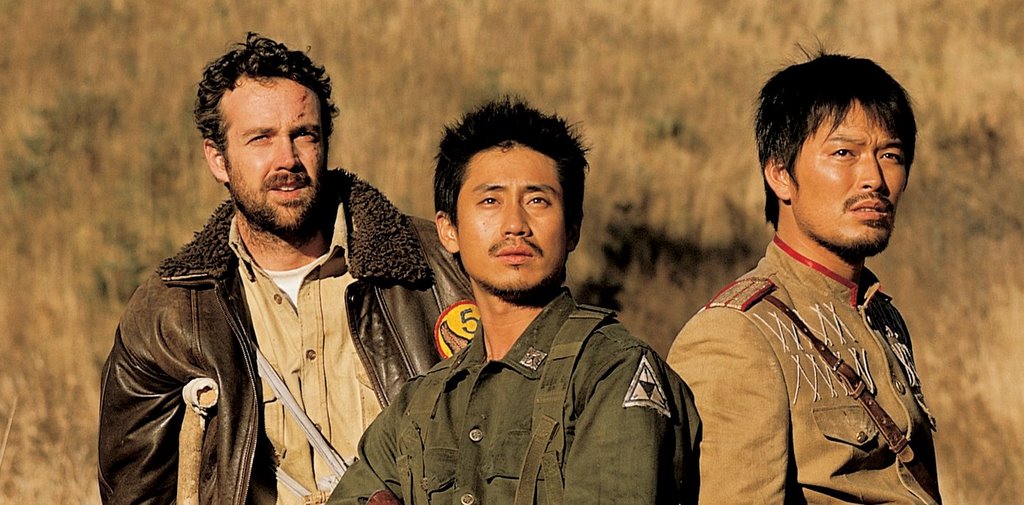
Given Roh Moo Hyun's recent comments about the United States, South Korea and differences in North Korean policy, I thought it might be good for everyone to just pull out a copy of "Welcome to Dongmakgol" from their video library or local rental place and sit down and watch it together. Following in the trend of what I call the "sympathy for the devil" trend of movies like Spy: Lee Chul Jin, Swiri and JSA, Welcome to Dongmakgol takes the genre even further, not only showing a sort of sad affection for the North Korean characters, but truly embracing them as, well, Korean (something Heaven's Soldiers tried to do, but the movie was lacking in fulfilment overall). And the antagonist is war itself, not the Americans, the North Koreans or the South Koreans. A welcome change. After all, cant we all just be friends?

25 January 2006

Roh: Balancing Unity with Protection

Speaking at a New Year press conference Jan. 25, South Korean President Roh Moo Hyun said "I do not agree to some opinions in the U.S. which appear to be in favor of toppling, pressuring and raising questions against North Korea." He followed this up, in a more conciliatory tone, with "As there are no signs of the U.S. adopting such measures, there are no differences of opinion between Washington and Seoul."

Roh’s comments play on several different topics, including accusations of North Korean counterfeiting, pressure for Seoul to join Washington’s Proliferation Security Initiative (PSI) and shifts in the U.S.-ROK strategic alliance. In particular, his comment is directed at North Korea, which has accused Washington of raising the counterfeiting issue now as justification for shifting away from dialogue and back toward the end-goal of regime change in North Korea. By announcing his differences with “toppling, pressuring and raising questions against North Korea,” Roh hopes to reassure Pyongyang that South Korea is not suddenly shifting its strategic imitative toward engagement.

Roh is concerned that the recent agreement with Washington to allow “strategic flexibility” of U.S. forces stationed in South Korea could be interpreted by the North as Seoul giving a green light to U.S. forces to carry out operations against North Korea. The same applies to Seoul’s agreement to at least observe the PSI, which was established to help isolate North Korea and prevent Pyongyang from trading missiles, missile parts and possible nuclear or other weapons technology.

In both its agreement to allow strategic flexibility and to participate – albeit mostly passively – in the PSI, Seoul has made sure that its actions are ambiguous enough not to aggravate the North, particularly at a time where Beijing appears to have nearly convinced Pyongyang to return to the six-party negotiating table in early February.

But Roh is also making it clear that he is not opposed to working with nor maintaining close relations with the United States – a tone he feels necessary if Seoul is to have any leverage in shaping Washington’s North Korea policy. Thus, allowing strategic flexibility – however controlled – joining in the PSI – even if from the periphery – and saying there are “are no differences of opinion between Washington and Seoul” are all meant to send the signal to Washington that Roh knows where his true ally is.

And so he continues to try to walk between the two fronts – and to take on the role of mediator between Pyongyang and Washington (even if this may put Seoul in competition with Beijing for that role). Roh sees South Korea’s future tied with the North, the economic and security future dependent on maintaining relatively peaceful relations and eventually drifting into reunification – so that the combined 77 million Koreans can compete together on a world stage – unified rather than divided. At the same time, he sees the United States as a necessary ally even for a unified Korea, as the peninsula may find itself in the not-to-distant future caught between a China and Japan increasingly hostile toward one another.

In the end, it is geography that will define Korea’s future – just as it has defined its history – and the minnow between two whales needs the strength of unity and the protection of the outside power (Washington) to keep it from being crushed between its two neighbors or simply consumed by one of them.

24 January 2006

The Way Home or Out of the Petri Dish

05:40 – Koryo Hotel

The telephone rings, I reach over, pick it up, and hear “Hello. Good Morning. Morning Call.” I grunt an assent and hang up the receiver. Actually, I was already up half an hour before the call. My sleep was not as sound, having too much canned coffee as we stayed up and shot pool until late.

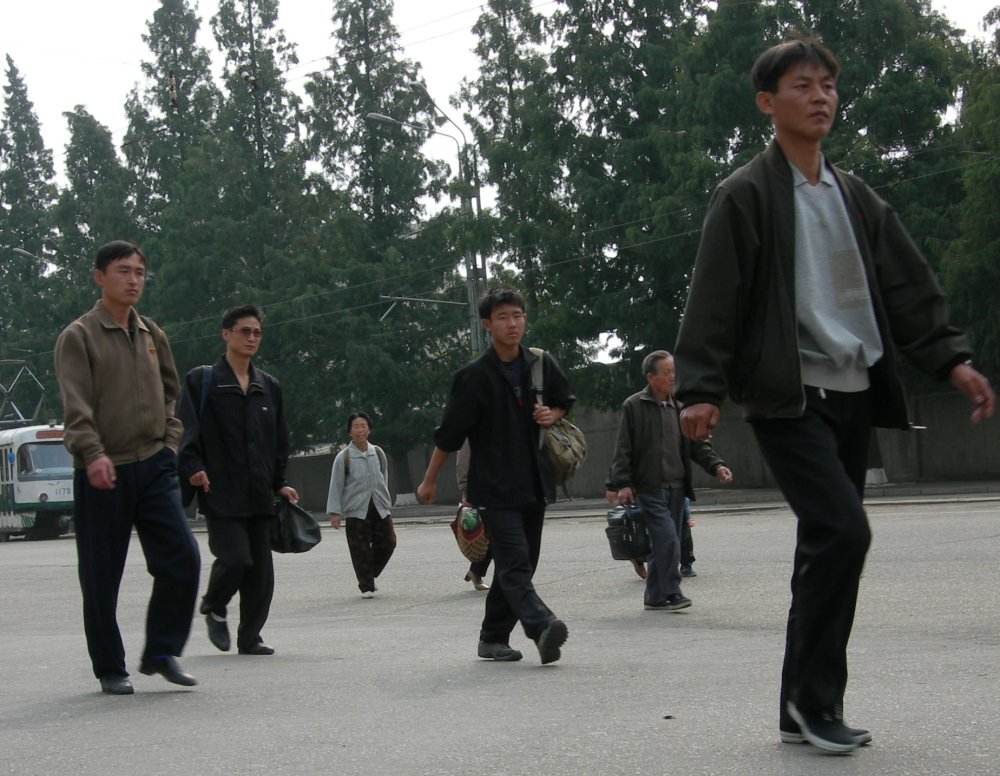
This is the last morning in Pyongyang. I finish up a few last-minute postcards, pack the last of my luggage, toss the complimentary hotel slippers into my suitcase and zip it up. Outside the window, the city is starting to stir. The smell of smoke fills the cold morning air as the first people begin shuffling down the sidewalks. No one here walks in the street, only on the sidewalks, and only cross in the under-street crosswalks.

Lights are coming on in the apartment blocks as the first traffic starts moving down the streets. In the distance, one of the building’s façade lights up in blue and white flashes as the electric tram rolls by. A bicycle rolls by, a horn blows in the distance. More people begin moving slowly down the still-dark sidewalks.

I am packed and ready to go, yet not really ready to leave. At the same time, I want out of this bubble existence. I have no control over my life here. Wherever I go, people either avert their eyes or stare hard at me. There is no opportunity for simply taking a walk. We live here in a constantly moving protective security zone, tethered not for our own safety, but so that we don’t infect the population with our ideas.

That, it seems, is the most accurate way of describing the lingering feeling during the visit – we are quarantined, isolated... a tour of “bubble-boys.” And this is one of the key fears of the government – having no exposure to the “disease” of outside ideas (and thus no immunity), a violent and painful epidemic could break out should the population become infected. We are the walking bird-flu vector of alternative thinking and differing realities.

The question for the government is whether they decide to slowly inoculate the population or try to keep it sterile. But it cannot remain sterile forever, can it? Already ideas, images, thoughts are slipping in over the border. Our own tour may be part of this inoculation campaign – exposing the people to a relatively neutralized strain of Americans. Or were we simply held in a sterile containment, given a sanitized tour where, though we can see them, they cannot be dangerously exposed to us?

And so, as we drive to the airport, we see our last glimmer of life here. The morning “rush hour” as it were, people on bicycles, on foot, on the buses, heading off to school or work. The cycle of life continues in its grey existence. The airport is packed, another Air Koryo flight is to depart for Beijing before ours, and there are maybe three times as many people in the airport as it was designed to handle. On the big board, there are four outgoing flights listed for the day – two to Beijing in the morning and two to Inchon in the afternoon – what an odd sight being in Pyongyang and seeing scheduled flights to Inchon.

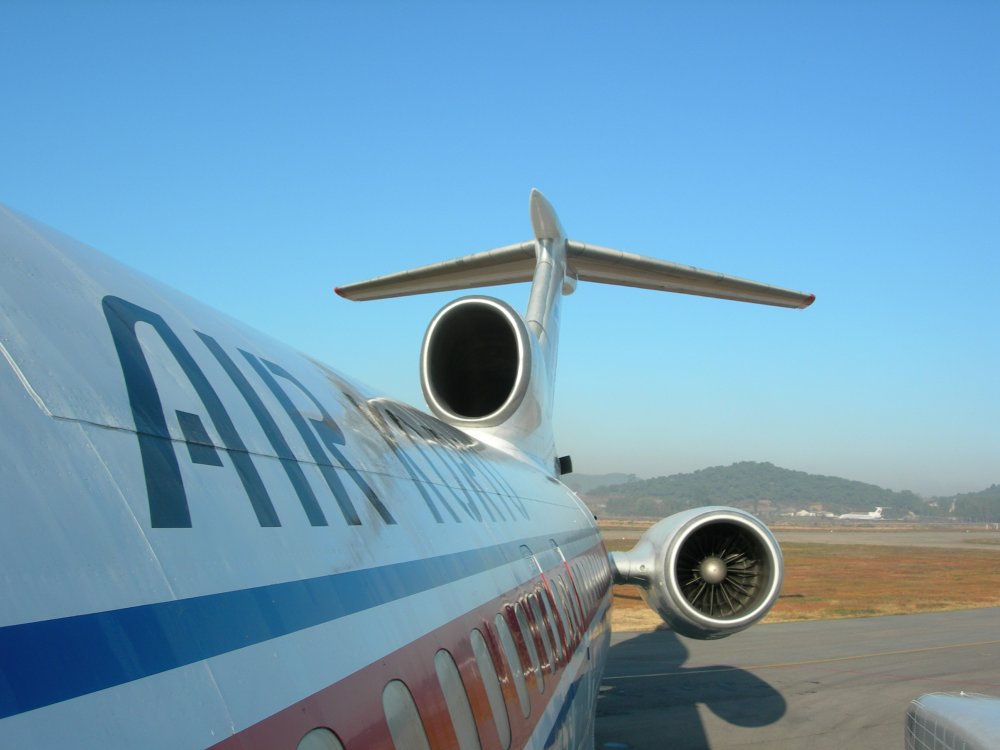
On board our Tu-154, the speakers belt out the melodious sounds of high-spirited ladies singing martial praises glorifying the Kim Il Sung. We share our flight with several Korean/Japanese tourists and a few Thai. It is crowded and loads slow, but at least I have another window seat, allowing the last few precious glimpses into life behind the veil.

As we taxi down the runway we pass several large old Russian-made helicopters parked off the taxiway. Everything around us gives the feeling of going back in time, something out of an old James Bond movie – I half expect to see Sean Connery slip out from behind a hanger and commandeer a helicopter.

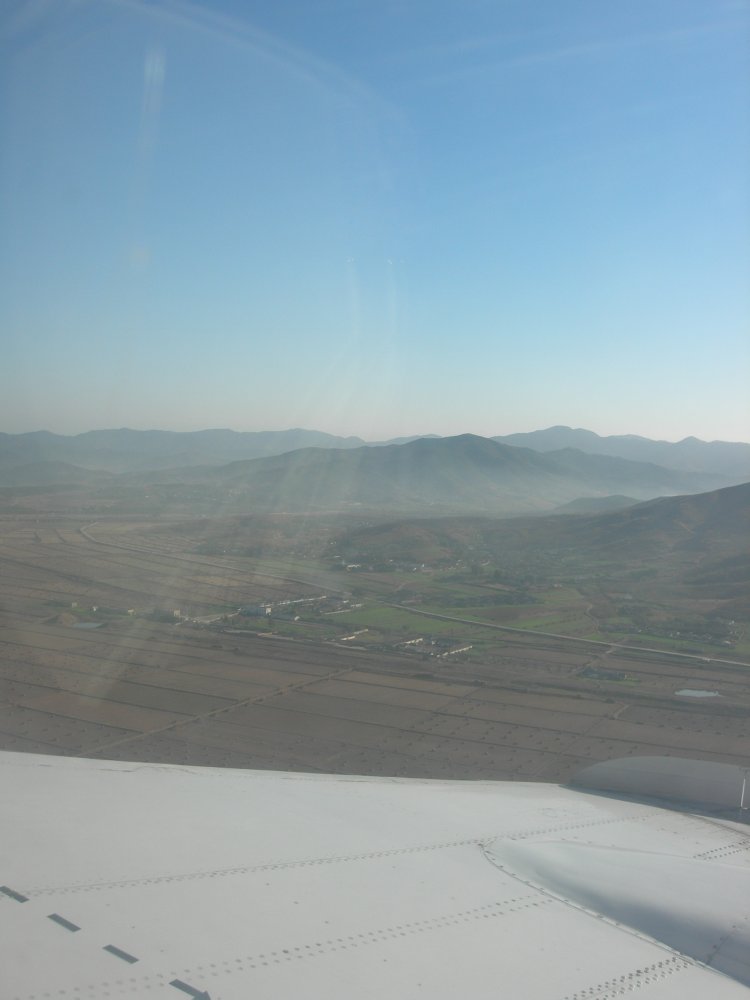
Our takeoff is much smoother than on the flight in, though the snack is a “Pyongyang Burger,” a three-layer bun with spread with butter and topped with onions, a single piece of lettuce and an unidentifiable “meat” patty. The further north we fly, the higher and more denuded the mountains beneath us. Rivers wind between the peaks, dammed in some places to form reservoirs. There are small towns dotting the landscape. The stewardess explains the revolutionary aspects of the terrain, linking all back to the Great General. A land reclamation project passes below, the side of a mountain being blasted to build a plain.

The mountains seem to go on forever, undulating through a sea of clouds, fading into the mist. A stewardess pops through the curtain from “first class,” snaps a picture, and darts back into the other cabin. This repeats, until we anticipate her arrival and are prepared with awkward faces – a final and fitting ending to the bizarreness that was – and is – North Korea.

Epilogue: As we step off the plane into the Beijing airport, there is a sense of openness, and several of us utter how great it feels to be back in a place like China, where we are so free. And then we laugh at the absurdity of the statement, and I already long for another chance to enter the hermit Kingdom.

20 January 2006

The Children’s Palace: Cradle of Community or Conformity?

North Korea is a strange country to visit. The closed society is not as closed as perhaps anticipated, but there is always the sense that one is perhaps contagious – or a forbidden joy that all but the biggest risk takers avoid. All others avert their eyes.

North Korea is a country juxtaposing aging apartment blocks and a pervasive grey dust with massive shining stone monuments, glistening in the sun as it filters through the haze.

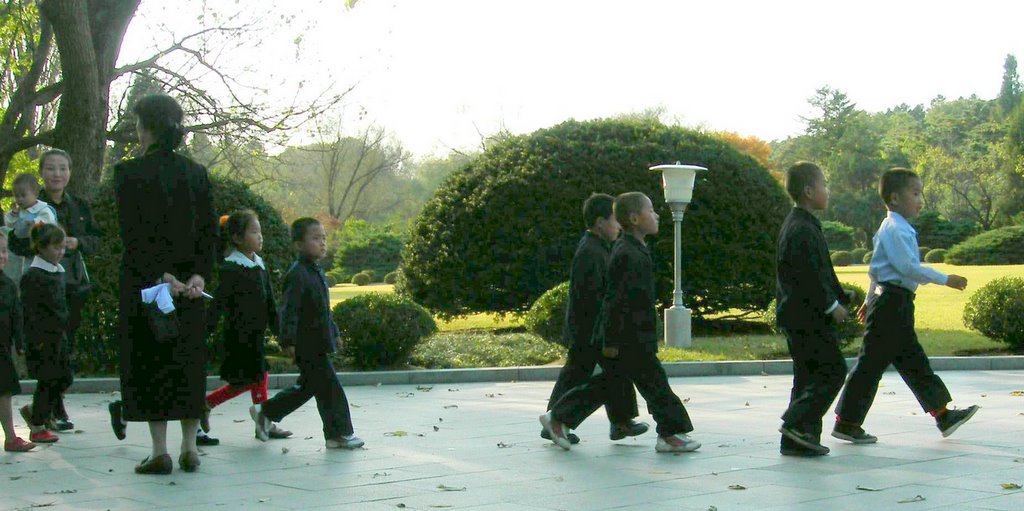
North Korea is a land of tight control and yet freedom – freedom for the youngest of children to roam the city with little apparent fear of harm or ill intent.

It is a land of spectacle – as seen in the Arirang festival – and a land of drab monotony.
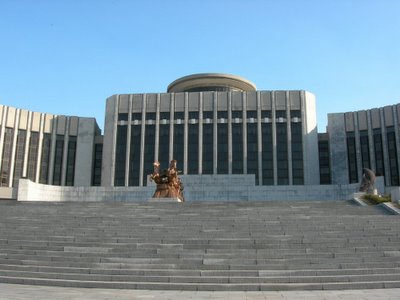
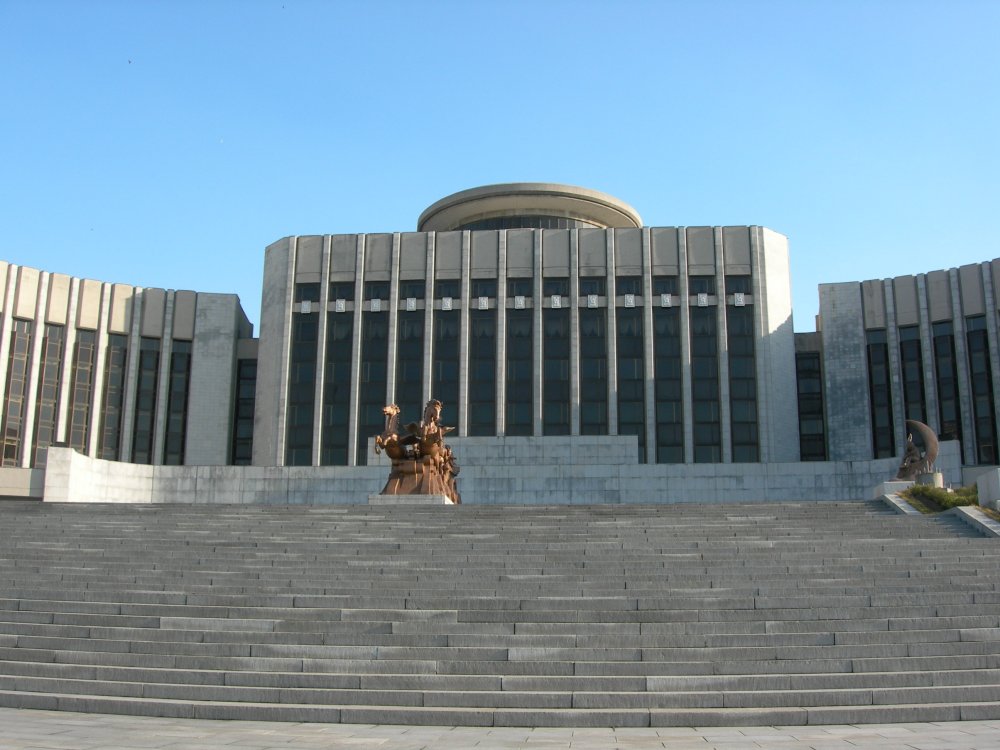
But perhaps the most impressive (or impression-making) aspect of the visit was the stop at the Children’s Palace. It is a massive complex, a curving building looming at the top of a mountain of stone steps, outstretched stone wings waiting to embrace all who make the journey to the top. A bronze statue near the entrance appears to capture the mood.

Winged horses – the Chollima spirit visible in their flared nostrils and rearing posture – pull a sled filled with costumed kids – an ancient king, a musician, a spaceman, a soldier – all rendered in that comic glorification of children seen in the propaganda posters. There is something disquieting about the socialist realism of the winged horses coupled with the whimsical realism of the children. But this, I discover, is repeated throughout the building – only in living form.

We are met by our guide, a girl of 12, dressed in her uniform, hair pulled loosely back, a watch on her wrist, a red bandana around her neck, her cheeks blushed with the honor of her role as our guide clashing with her schoolgirl shyness. Her speech is already tinged with the breathless adoration of the stewardesses and newscasters.

We enter the building, large, marble and surprisingly cold. Our footsteps echo in the massive entryway, the sound bouncing off of the cold stone all around. The shining letters of a saying of Kim Il Sung adorn the entryway wall. But while this is a place of and for children, they are dwarfed by the massive scale of the building, and the feel is colder than Mao’s mausoleum – and somewhat less cheery.

We are led on a tour of the facilities, to room after high-ceilinged room of children practicing one craft, skill or activity, seeking perfection in self and unity of group. This is the seed that sprouts into the unity of the mass games. It is the cornerstone of the unified society. But it doesn’t seem to encourage individuality, or creativity. It is about oneness – oneness with peers, oneness with the state.
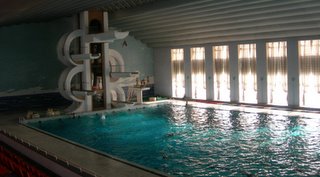
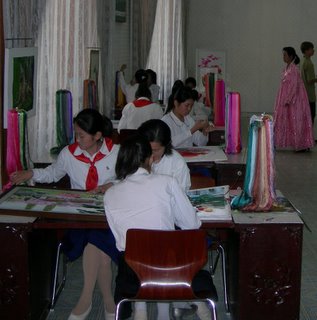
Despite the scale and richness of the marble interior, there are signs of wear – the skylights, the stair railings – and signs that things were being made pretty for the visit – the gym walls are fresh-painted (we find out when we lean on it). We are not the only guests today; a large group of South Koreans are also visiting the building, and it is for them that the improvements appear to have been made.
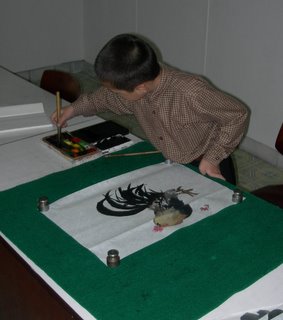
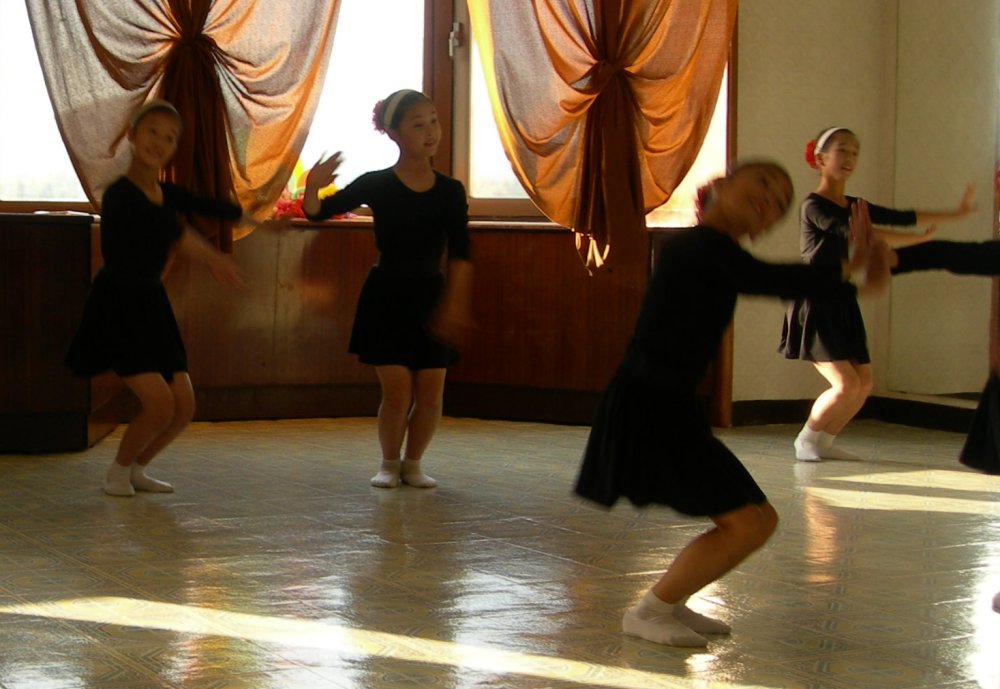
We enter the various rooms, and the instructors quickly shift their wards into giving a mini-performance. A dance studio. A massive indoor pool with a multi-level diving platform (an elevator takes the children up to their level). Accordion players. Painters. A room full of girls doing embroidery (and now I think I know where all the embroidered pieces come from in the tourist chops). Girls playing traditional Kayagum. Boys in the gym practicing Taekwon-do and playing basketball. In each room, there are the portraits of Kim Il Sung and Kim Jong il looking down from the walls.
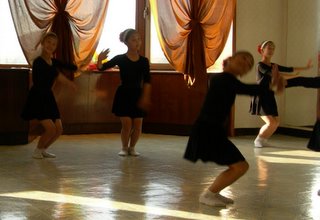
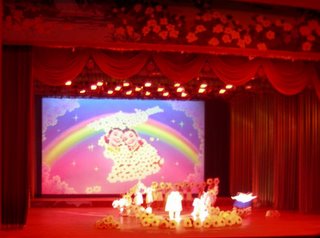
We are taken to one of the auditoriums for a performance, and some of us are chosen to buy flowers to give to the performers later. We are not the guests of honor, nor are the few parents in the audience. Rather, this is for the large group of South Korean visitors.

The show starts at precisely 10 minutes till five – perfectly on schedule and with no warning or fanfare. A six year old speaks, mimicking the breathlessness of her older mentors. The chipmunk-like sound of the hanbok-clad little girl singing. Microphones rise and descend through the specially designed stage as the performers are moved on and off in a rotating segment of the wood flooring.

There is a precision in the performance of these children – the obvious result of hours of practice for perfection. The microphones rise from small doors in the stage floor, extending to neck height. The next group of musicians rotates in on the moving floor, arriving in place just as the microphones reach their pre-planned positions. The sound of traditional Korean stringed instruments backs the young girl in her hanbok who walks out to play her wooden flute.

Musicians and stage configurations change with robotic preciseness. Girls in hanboks, boys in blue pants, white shirts and shoes, their red scarves bold around their necks. A boy walks out, a silver spangled shirt reflecting the spotlight. He opens up with the helium-induced voice of traditional Korean music as performed by a seven-year-old, swaying as he sings like a 1970s lounge act. He turns slightly, and graciously motions to his accompaniment before belting into another solo.

He gives a sharp overhead salute before leaving the stage, his band moves off, replaced by girls dancing a flower dance. Dressed in an over-the-knee version of the hanbok, unbreaking toothy grins on their powder-white faces, framed with thick red lips. Out prance the dancers, the music picks up pace, and in come the jump-ropers. One in the back misses a step, the first sign of fallibility of the performers. Faster and faster they skip rope, always in near perfect unison. Out come two more with a long rope, which, as they spin it, the smaller performers skip their rope while also skipping the larger rope.

Down comes the curtain, up come the microphones, and five older children – perhaps highchoolers – step on, accordions hanging over their chests. The girls wear blue velvet shirts and pouffy-sleeved white blouses, the in blue pants and white shirts. Their performance is followed by a song-and-dance comic lesson in the form of a dance mimicking a ssirim match. The smallest performer resplendent in red defeats the much larger blue-clad opponent. Blue wants a rematch, cheats some, but is ultimately defeated again by his diminutive opponent. Is this a thinly veiled anti-imperialist message?

More and more performers take their turn on the stage. In the South Korean section of the audience, there are some who have fallen asleep, but others watch with rapt attention. And then it is time for a unification dance, and the South Korean tour bursts into applause. As it dies down, there is a unification song accompanied by accordion, and tears in the eyes of some spectators.

And now for something completely different – a samulnori accompanied by a rock band, with a complete trap set. On the hourglass drum is the boy who is obviously the Jang of his class, playing a drum solo that would make Tito Puente cry. And he even performs the farmers hat spinning dance while playing, leaping around his drum while keeping the rhythm going. Then the band kicks in, and a girl sings a 1970s song, triggering the Pavlovian response from the South Koreans who join in with rhythmic clapping.

And then it is time for the hula-hoop performers. Kids of all sizes. Preschoolers with multiple hoops spinning. Tossing hoops through the air for the smallest of performers to catch as he spins.

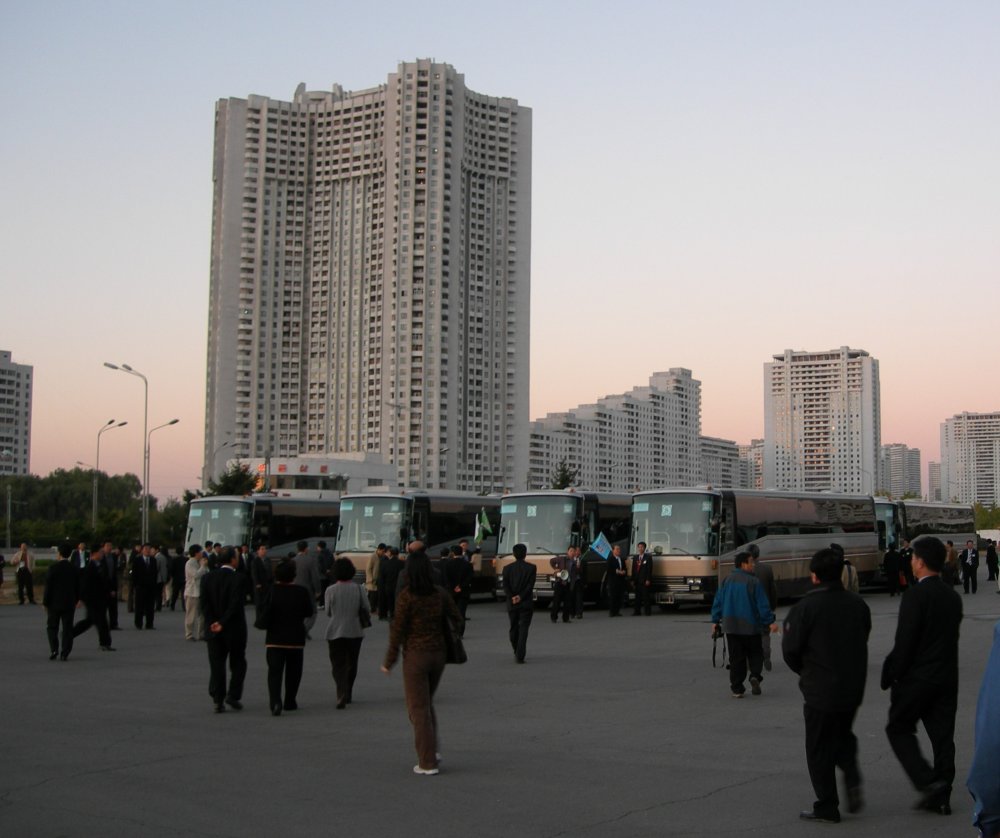
And time for the finale, the stage is packed. And then it is our turn. Those of us chosen to buy flowers are sent to the stage to hand them to the our favorites, as the South Koreans pack the stage handing out pencil and paint sets, flowers and other assorted rewards. And with that we are shuffled away back to the busses. Leaving behind not just the formal show but the overall experience of seeing room after room of kids shown simply to impress us with their skills and talents.

And while these are truly impressive children, I am left wondering if there is something missing. Where is the warmth, the fun, the grit and spontaneity of childhood? Where are the runny noses and the grass stained pants? The bruises and the chasing and the noise? The cold, hard surroundings, so massive, seem to press down on the individual. There is tremendous opportunity for them here, to learn skills, to have a safe and constructive environment for after school, but is it at a cost? Is there room for individuality? For creativity? For personal expression? Can there be innovation in the future, or is this another generation destined to follow?

The facility is a great gift, it is a community of kids, but its structure and sterility leads to conformity – a great benefit to societal harmony but a hindrance to future innovation or creative response.

19 January 2006

The Place of 10,000 Scenes


Mangyongdae, the place of 10,000 scenes, the birthplace of Kim Il Sung, one of the most “sacred” places in North Korea. There is a park-like atmosphere, a cool breeze blowing through the trees, as we walk in a group to meet our local guide. She asks us, after hearing we are from America, if it is our first time to North Korea. And here is where the lack of thinking and common sense comes in, as one of our group replies that it is the first time because “your government makes it difficult for us to get here.”

There is silence, a few stifled groans, and a look from our regular guides that could stop a charging rhino in its tracks.

Our local guide carries on, explaining how Kim Il Sung’s ancestors were grounds keepers and grave keepers, how they tended this land for others, how Kim lived in a cemetery, his father a tenant farmer. There is furniture, farming implements, household items, all preserved, or ostensibly preserved, from the young life of Kim Il Sung. Even a misshapen daenjang jar, a testament to the low wages of Kim’s ancestors that they had to settle for such pottery.

We are taken to the typical tourist shop in the park, and waved to by the school kids visiting the famous site. Then it is quickly shuttled off to the bus to begin our journey to what will turn out to be one of the most bizarre elements of the entire visit – the Children’s Palace.

17 January 2006

Simple Pleasures

We leave for another “shopping” stop. Past a yogurt stand. Several ladies chatting together, squatting by the side of the road, their kids playing ball nearby. And on to the shopping stop, next to the comedy club. Same old same old. Nothing new or particularly interesting – all the shopping areas for the foreign tourists are the same. I really want to visit a clothing store, get me one of those vinalon jumpsuits, but not a chance.

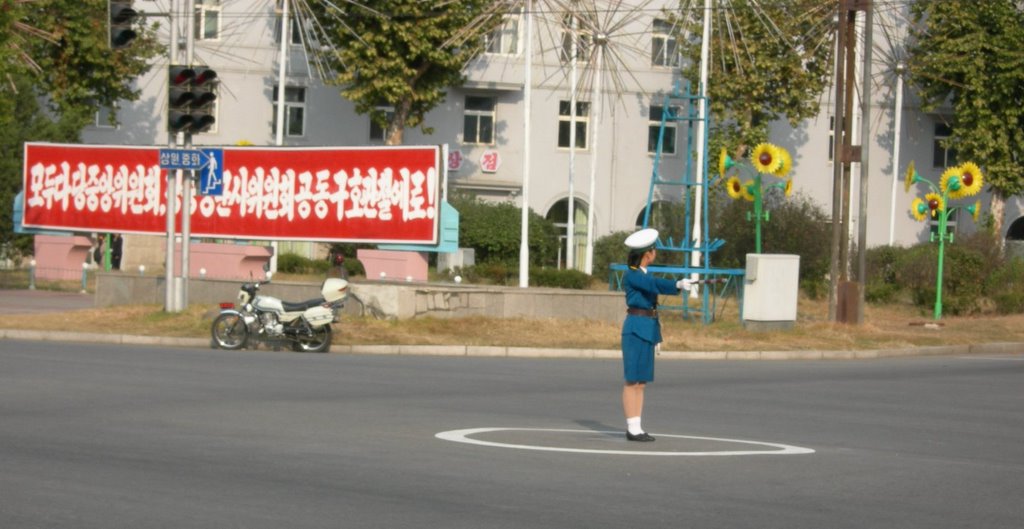
Back outside, we beg and plead until the guide acquiesces – he lets us run down to the end of the block to shoot pictures of the traffic lady! Suddenly a dozen westerners start running full speed down the sidewalk, cameras swinging around our necks. The North Korean pedestrians look shocked and confused as we run by. What thoughts go through their heads?!

And we start shooting picture after picture of the blue-skirted traffic lady, pirouetting robotically in the middle of the road, waving her baton at the few passing cars. The rhythmic motions, crisp in the starched blue uniform, hold our attention. And then, across the street, around the corner come dozens of uniformed soldiers, marching double-time, singing out a cadence. They round the corner, look across the street and lose their place briefly, as they see all of us standing opposite them, cameras raised, no guides in sight.

Down they go into the underground street crossing as our guides run up to us, shouting “Let’s go, quickly!” And we reluctantly follow them back to the bus as the soldiers emerge on our side of the street, marching directly to a night at the comedy club. This was our moment of freedom and excitement. It is over quickly but there was the brief exhilaration of being given permission to do the impermissible.

And the moment passes as we are loaded up on the bus and head off to Manyongdae, the birthplace of Kim Il Sung. Out the windows, Ajumas and Halmonis walk with brightly wrapped bundles balanced on their heads. Children run in and out of the street with no apparent sense of danger. Antique Russian tractors pull half-empty wagons, with small loads of cabbages stacked in back, hidden behind the smoke billowing from the tractor.

We cross the Taedong and Potong Rivers and past the Ryanggang Hotel where the rivers meet (there is a revolving restaurant on top, we are told). Past the sports complex, gymnasiums and stadiums. We are told that we are 40km from the ocean via the river. And now we find ourselves stuck in traffic, following a tractor hauling a load of dirt, and then we arrive at Mangyongdae.
A brief addendum – always have at least two cameras, extra film, and extra batteries. I lost a section of the trip at one point when my digital ran out of batteries, but covered with the manual camera. I lost another part when the photo lab lost a roll of film from the manual camera, but covered with the digital. But both led to missed moments, memories and opportunities. All my close-ups of the traffic lady disappeared into the photo-processing black hole...

12 January 2006

Pueblo: Pride and Paeans

After a busy morning (still day three) it was off to lunch at the Grand Theater (better kimchi here at least) and then a drive down to the river, past a billboard advertising for Pyonghwa Auto – yes a new car advertisement – and on along streets bordered with bits of garbage and plenty of apartments under construction. And then we arrive at a set of steps that will lead down to the river.

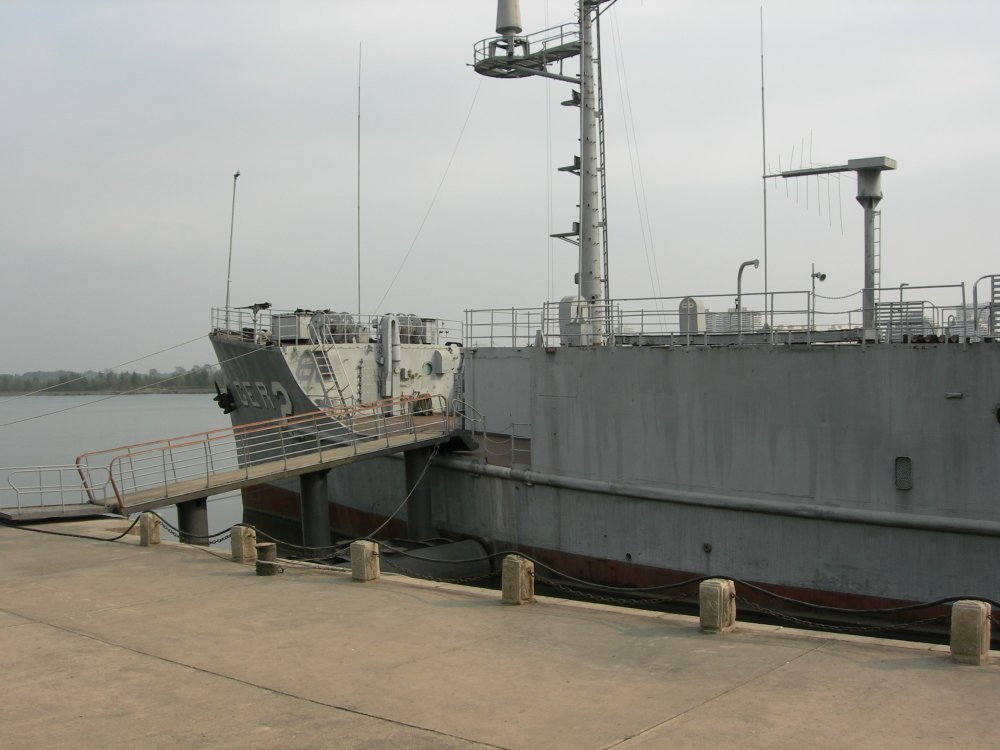
As a score of Americans pours over the ridge and down the broad stairs to the waiting ship below, a group of North Korean tourists looks somewhat agap as perhaps their least expected moment has occurred. Nearly two dozen Americans stand facing a similar group of North Koreans next to the U.S.S. Pueblo, North Korea’s trophy capture and the destination of this phase of a busy day. (For information about the Pueblo, I recommend you visit usspueblo.org run by the Pueblo Veteran’s Association.)

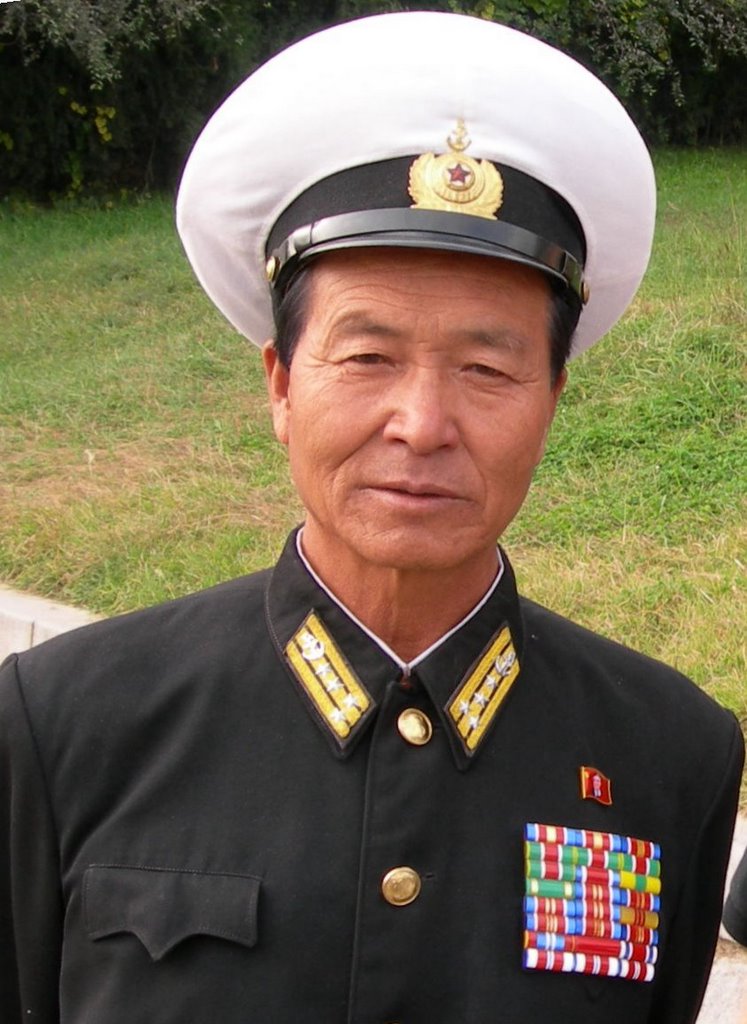
Our tour guide, it turns out, is Kim Jung Rok, who, it seems was part of the boarding party that took the Pueblo. He stands in his dark uniform, his chest covered in campaign ribbons, under his Kim Il Sung badge, his wrinkled face under a shining white hat with black brim. He exudes pride; pride in his job, pride in his place in history and pride in his privilege to share his story and view with Americans on this day. It is a moment that, whatever your ideology, you realize that a veteran is a veteran.

Then we are reminded we are in North Korea again. The tour begins with the “invasion” of the “pirate ship” General Sherman in 1866 (see the Secretary of the Navy report from 1867). The General Sherman, we are told, was the first ship from America to invade North Korea, but certainly not the last. It was sunk by “our people,” the guide says, and then informs us that the citizens who attacked the general Sherman to defend Korea were led by none other than the great grandfather of Kim Il Sung himself!

We are sat in front of a television in the ships galley and watch a propaganda film, loaded with glorious images reminiscent of a 1950’s cold war movie shown in elementary school to ward us of impending war with the Soviets. The music matches. The narrator, with an accent more reminiscent of the comic French English of Peter Sellers than the English-speaking North Korean it is, draws us into the story of the “Pueblo armed spy ship of the U.S. imperialist aggression forces.” The ship had a crew of 83 with six officers when captured, one American dies in the capture.

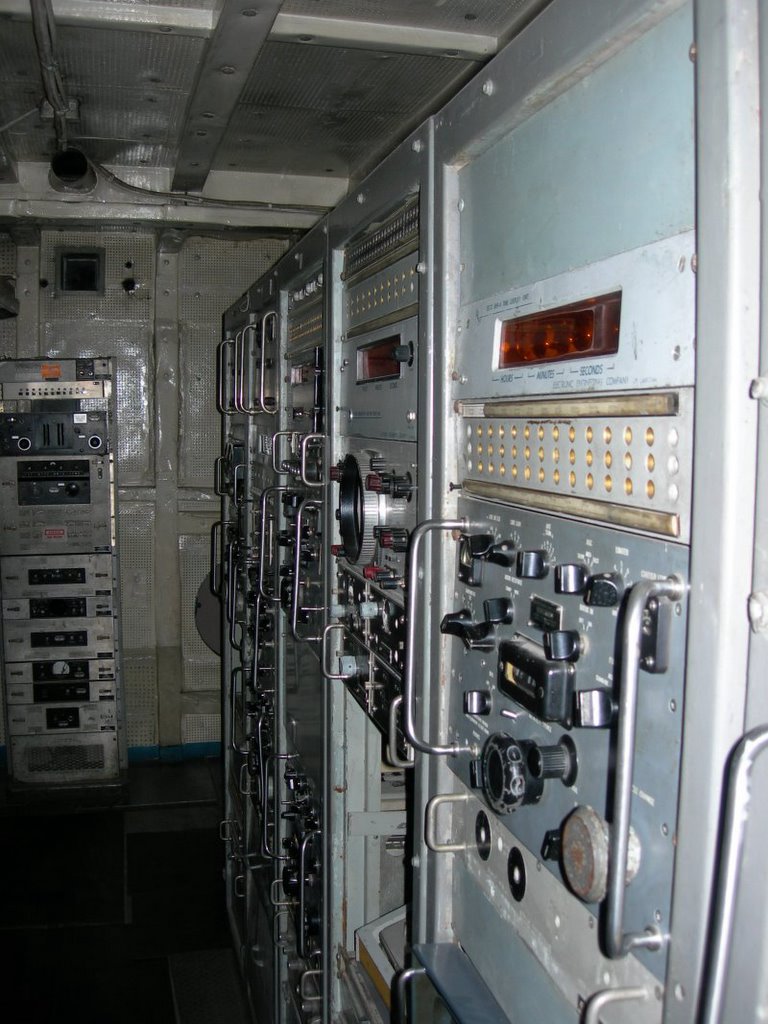
My attention wanes as a mosquito drones around my ear. There appear to be parts of the wall rebuilt with fiberglass. The interior is relatively well maintained. “...the brazen-faced U.S. imperialists...” It is interesting that the video credits Kim Jong Il with handling the negotiations at the time – in 1968. “...the enemy kneeled down before the Korean people and made an apology...” A flag-draped coffin flashes across the screen – the one American who dies in the action. “...the U.S. imperialists who kneeled down before the Korean People are now running on down hill...”

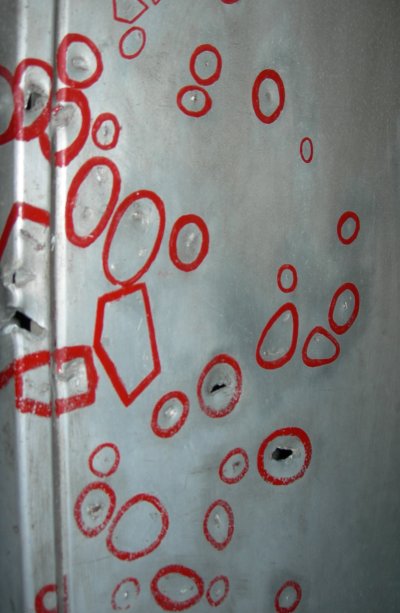
And we take the tour. Through the officers mess. Past the damage from the action (the scarred metal is marked with red circles to highlight where damage occurred). We see the Pueblo’s flag, a copy of the letter to Truman, other items of interest. And then it is story time again, as we stand in and around the bridge. When the north Koreans captured the Pueblo’s captain, we are told, communication between the Koreans and Americans was poor. So the North Koreans drew a picture of a big-nosed man, and made a questioning gesture. The American wrote the number 83 (83 members of the crew). The Koreans draw an eagle, the American wrote a “6” (six officers).

And again we are told that the Koreans are so proud of Kim Il Sung and Kim Jong il for capturing the Pueblo, the only instance that a boat of seven soldiers captures a ship with a crew of 83. Given that our guide was part of the seven that boarded the Pueblo (from their 12 person missile boat), one would think HE would remember that neither Kim Jong Il nor Kim Il Sung were actually there with him, but...

As we finish up, the bright red Honda generator seems a little out of character for a 1960s U.S. ship in a North Korean river.

I have mixed feelings about my tour of the Pueblo. On the one hand, it is simply a trophy of a bygone conflict, on the other, here I am standing with one of the Koreans who actually took part in the action – not exactly bygone. Here, he is a hero, in America, he is a villain and a pirate. Having met Commander Pete Bucher in the past, I stand here where he defended his ship, and smirk as I remember his story of his “admission” of guilt, and his offering to paean Kim Il Sung, paean the North Korean military... (pronunciation being “pee on,” the word being one he said he heard as a child in a radio commercial for ice cream).

08 January 2006

The Pyongyang Underground

We drive from the movie studio to a Metro station, our itinerary for the afternoon, our guide says, includes the Metro, lunch, the Pueblo, the birthplace of Kim Il Sung and the Children’s Palace. I gaze out the windows again, scanning for insights into life in Pyongyang.

A small boat sits on the shore of an irrigation canal, a wire run across the water, used to pull, hand over hand, the small ferry across. By the side of the road are small, independent businesses – an old lady squats by the side of the road, her handkerchief beside her, opened slightly to reveal several boxes of foreign cigarettes, a man refilling lighters, another lady with a handkerchief filled with three types of dried beans. These, like the roadside bicycle repairman, are examples of individual free trade, the Pyongyang black market. At one point later in the trip, we see one such seller who, as security officials approach, folds up her wares and quickly disappears into a metro station.

We drive on. Soldiers ride by in a motorcycle and sidecar. Goats graze, tied up in the grass between the street and river. We pass again the guest houses for VIPs, their bright pastels contrasting with the grey so pervasive in the city. Our guide says nearly 2000 non-Koreans live in Pyongyang.

The smiling face of Kim Il Sung looks down benevolently on the people from the sides pf buildings. But of his son, Kim Jong Il, there is no sign. This, too, is part of the cult of personality the younger Kim has helped establish around his deceased (but perpetual President) father. Kim Jong Il’s legitimacy comes from his father, and as such, he must be cautious not to appear to try to surpass his father, not to supercede him.

We pass several roadside parks, many adorned with concrete animals, looking eerily like the White Witch’s courtyard in Narnia. By the side of the road a military truck stands broken down, its hood raised, the hand crank sticking out of the grill.

And we arrive at the Metro.


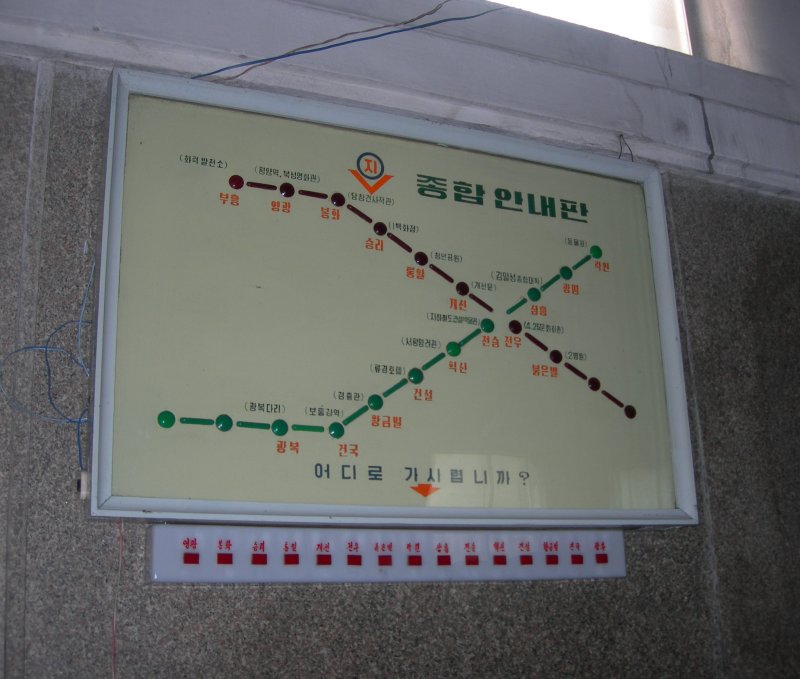
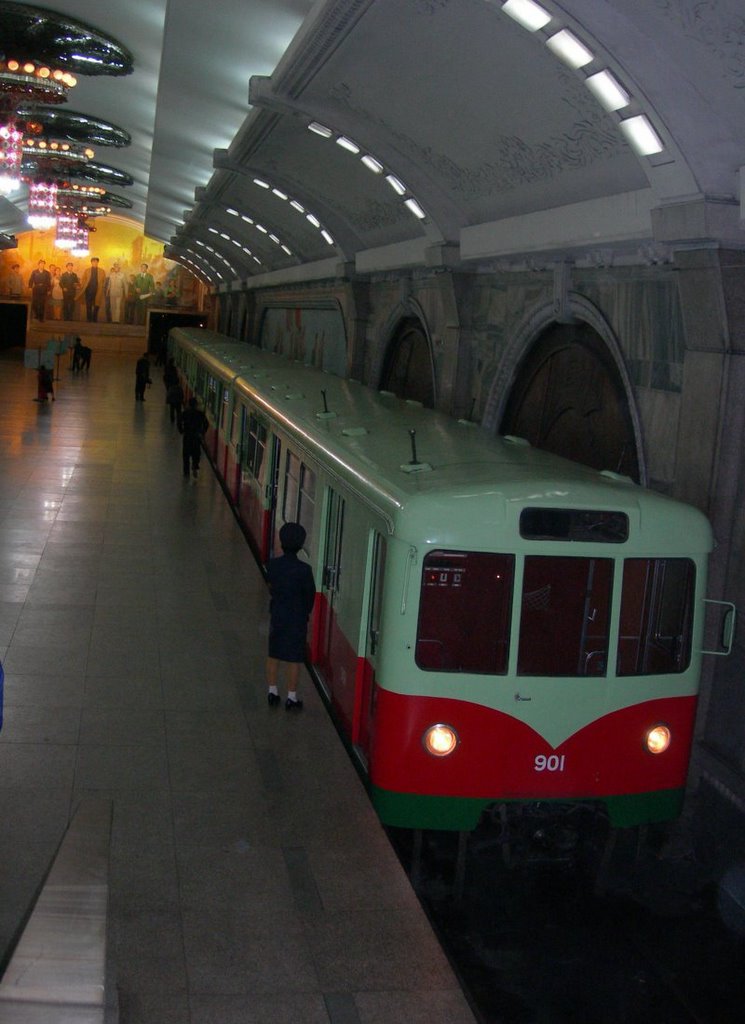
We visit two stations – Reconstruction Station and Glory Station – and we ride between them in the old East German used Metro cars (complete with German graffiti scratched into the windows). The usual numbers – Metro construction began in 1969, with full scale construction taking off in 1971. By 1973, two lines are complete and the Metro opens. In 1975, 17 Metro stations have been completed; nodes along the 34km of track.

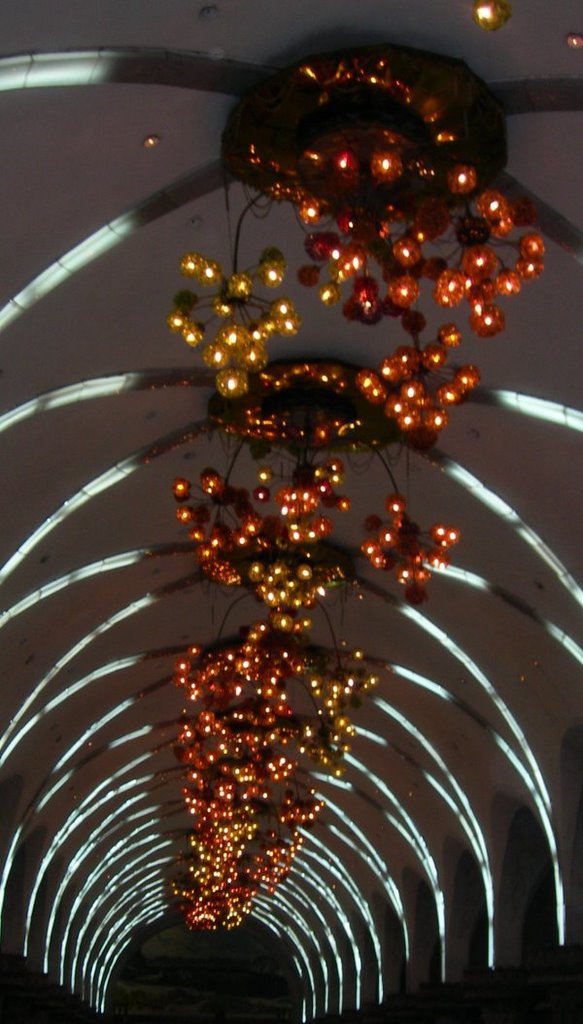
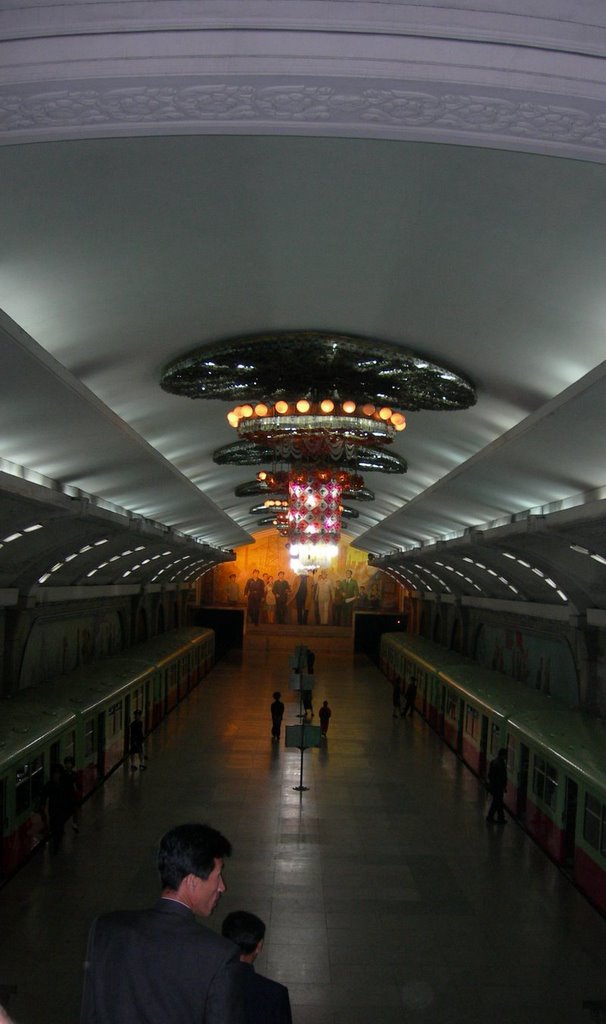
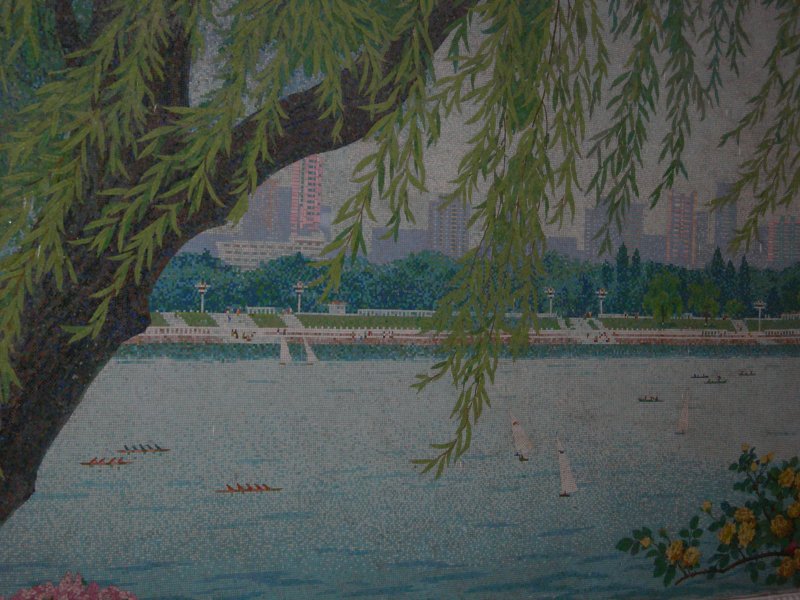
The metro stations themselves are deep underground – alternative bomb shelters in case the imperialist aggressors nuke Pyongyang. The decorations are both impressive and shockingly gaudy. The mosaics on the walls are stunning, depicting historical and modern scenes of North Korea, its struggle and the people’s lives. But the chandeliers are truly the best part, looking like something rejected from a 1950s aluminum Christmas tree.

We board the first car of the arriving train, a car that is clearly for us foreigners alone at this moment. Yet one North Korean worker, perhaps from a factory, boards with us and smiles shyly. We exchange a few greetings in Korean before our third guide – the political enforcer – sits next to our uninvited guest, and his head sinks into his lap like a scolded dog. When we arrive at the next station, he shuffles off before us, not looking back.

In a naive attempt at friendly diplomacy, I ask one of the guides to see if some of the children in the Metro station want some chocolate – after all, isn’t that they way friends are made around the world? The child in question runs in terror from my guide, despite the fact that he, too, is North Korean. Is this the early signs of xenophobia, as I stand there, or are they trained early to distrust, or are they just trained to not take candy from a stranger?

As I ride the escalator back to the surface, I feel as if I am diseased or shunned – a full four steps above and below me are empty as no one stands too close to me, perhaps afraid that I will somehow infect them.

07 January 2006

Let Us Create More Revolutionary Films Based on Socialist Life

I steal the title of this entry from the classic talk to writers and film directors delivered by Kim Jong Il in 1970. Just as exciting as the title of the article, so is a visit to North Korea’s premier movie lot. There is some sense of awe and interest in the sheer spectacle of Socialist filmography, but the excitement dies down rapidly upon seeing the lack of anything interesting. A back lot tour is dull enough in California, but in North Korea...

As we pass through the gate, we are flanked by large, pale concrete buildings, windows trimmed in white. The insides of the open doors are blue, red and white signs are placed above the doors. A monument stands ahead of us at the end of the road. We pick up another guide, this one from the studio, and move forward, admiring the large, revolutionary mosaics on the buildings.

We disembark and stand in front of a large bronze statue of Kim Il Sung, his arm wrapped gently around a smiling girl, the two flanked by other Koreans, one with a movie camera. We are told very directly that we can take pictures only AFTER we listen to the guide’s speech. Pictures are always “after the speech.”

And another typical tour begins. The movie studio was founded in 1947. The first movie was completed in 1949. They have made 1000 movies. The studio was originally for army, cartoon and documentary films, but now there are three separate studios. Kim Il Sung visited the studio 40 times, Kim Jong Il visited more than 500 times (Kim Jong Il loves movies). They are now working on “Nation and Destiny.” The statue commemorates “The Flower Girl,” which won an award in Czechoslovakia in 1972 (we are somehow supposed to be impressed that it won an award in another Communist nation three decades ago – thus proving he quality of North Korean film making).

We travel through the studio to the outdoor sets. Young girls in red scarves laugh as our bus passes by, men with guns sit by the side of a building (perhaps they are just extras...). We get a brief walk at the Yi Dynasty street, one of seven streets (the others are Chinese, Japanese, European, Pre-revolutionary Farmhouse, South Korea and Mount Paekdu). As we walk back to the bus, there are several young women, their make-up thick on their faces, sweeping a graveled area near the building, apparently removing tire tracks and foot prints.

We drive the bus through the 1920s/1930s Chinese street, used to represent Manchuria during the anti-Japanese struggle. Down a windy road along a hillside, never meant for a bus the size of ours. Through a South Korean street of the 1950s, onto a 1920s/1930s Japanese street. And then off the bus and we walk down a hill to the pre-revolutionary farming village and some Yi Dynasty sets, where they are filming a movie. There we are privileged with a photo-op with costumed actors, as well as the chance to have a picture taken with the black-suited Mun Il Kwan, who supposedly is a famous North Korean movie star (though he refuses to give autographs).

Overall, the studio was unexciting, but it was somewhat fitting to be inside the place where myths are made inside a mythical kingdom. A Magic Kingdom inside the Magic Kingdom, as it were. As we drive out, the streets of the studio are not exactly crammed with Korean tourists. Even in here, by the studio buildings, there are mats of beans drying. No space is wasted at the harvest. And off we go, to the Pyongyang Metro.

Off to the Movies. (Still Day Three)

We load back onto our buses and leave the military museum, bound for the revolutionary film studios. The sky is grey, the town is grey, I bumped my backpack into a wall and now it is grey. We pass by one of the many chestnut and sweet potato stands. An olive colored truck pulls up next to the bus at a traffic light. Four old women and a man sit in the back on a pile of dirt, bright scarves cover the women’s hair, the man wears a dull green jacket, his head topped with a typical “Mao” hat. As they look into the bus windows, they smile and wave, a slightly embarrassed shyness crossing the women’s faces.

The light changes and we drive on. Men laying new paving stones in an undulating sidewalk. Reddening ivy climbing over graying buildings. Passing through a higher class neighborhood, smaller two-storey apartments in pastel colors, a basketball hoop in the parking lot. These, it turns out, are the housing for important visiting foreigners. Everywhere else, poor construction abounds and grey dominates. If this were a major earthquake zone, it would be flattened instantly.

A small bicycle repair business by the side of the road – a man sitting on the sidewalk, a satchel of hand-cut wire spokes and a few tools. Nearby, dark jacketed old men squat by the roadside, talking under the brims of their dark caps. In fields near the edge of the city, ladies in brightly colored puffy winter jackets gather the rice straw into mounds as geese feed in a nearby ditch. A few sheaves are laid out on the roofs of buildings to dry. Old men, bicycles parked by the side of the road, glean in the field, looking for missed heads of rice as a group of scarved ladies squat in a group, taking a break, sharing food and drink. By a pond, men fish with long poles. Women rest briefly, their yolks laden with buckets of water.

04 January 2006

Day Three: On the Propaganda-Go-Round

I like military museums. They have lots of cool technological stuff, weapons of destruction (mass or otherwise) and their structure, layout and displays tell a lot about the people that put them together. The Chinese military museum, in Beijing, is magnificent for its old-school Cold War charm. It towers, adorned with a red star, complete with ballistic missiles in the parking lot. The North Korean military museum, at first impression, pales by comparison.

We were rushed in (to prevent us from photographing the soldiers and sailors across the street waiting for their tour) and sent scrambling down the barely lit echoing corridors seeking out our guide, who, as we arrived in the first display room, was already part way through her presentation. It was a presentation that was apparently simply drilled into her head in English, memorized and ready for recitation, no matter what the circumstances.

As she went on about the true start of the Korean War, one of our regular guides reminded her that our group had not heard everything she had told the group that had preceded us by five minutes. So she stopped mid sentence and restarted from the beginning. You could almost hear her brain rewind. Part way into her retelling, our regular guide got impatient, and stopped her mid sentence again to send us on to the second room, where she began her new “recording” for us.

As we left the room, the lights were switched off behind us and as we entered the next room, they were switched on. We get the usual – the museum was built in just one year by soldiers in the 1970s. Kim Jong Il and Kim Il Sung paid some 15 visits to the museum... We hear of the U.S. aggression against the South Koreans first, as she drones on, reciting the memorized propaganda. The guide stands maybe five feet tall, with a green uniform skirt, her hair pulled back, a red star centered on her oversized brimless hat. Red shoulder boards and collar tabs, trimmed with gold, adorn her slightly fitted green jacket, her Kim Il Sung badge over her heart, a gold and red diamond badge above her right pocket. Sensible shoes on her feet, a drab tie at her neck, and a pointer in her hand as she leads us from room to room, reciting her prepared speech.

The rooms are high-ceilinged, wide and open, with concrete floors – echoing cold chambers with documents and paintings on the walls, a few scattered glass cases holding relics and artifacts of the great struggle with the American imperialist aggressors – a rifle, a document, even a microphone once used by Kim Il Sung. She asks if we want to see the progress of the war on a lighted map, and before there is an answer, she begins, as light bulbs mark the advance and reverse advance of the victorious North Korean forces. During the first phase of the war the North Koreans liberated some 90 percent of Korea, we are told; later the Chinese enter the war only because the U.S. bombed Chinese territory. Not even the Chinese still follow that line.

They say history is written by winners, but no one told the North Koreans that...

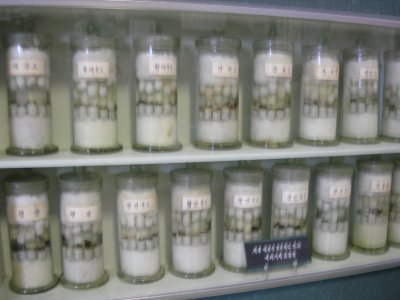
We enter a new room, shelves lined with jars of cotton balls and insects, pictures of corpses on the wall, a display of a bombed out building with various sizes of U.S. bombs displayed. Her voice quavers as she discusses germ warfare and the killing of women and children. It is the only emotion she shows on the tour (though later she blushes when having her picture taken). A lady on the tour starts droning “I can’t believe Americans did this...,” she is taken in by the pictures and commentary. While I respect those who show emotion, I wonder why anyone would go on such a trip without doing at least a little research. War is bad. People die. On both sides, there were terrible atrocities. A leftist on the tour comforts her, denigrating America.

I seethe, but hold my tongue. I am here as a guest and observer, not to promote one political view or another. I am no fan of war, and know of terrible things by all involved. But I wish people would look and see past the display, would read and ask and study, would observe and not pass superficial judgments. Pictures do lie, or at least show selective truth, and are designed to mislead. But it is not the North Koreans that I criticize – I understand the view they are trying to promote and why they are trying to do it – I criticize those who have come and not bothered to learn before traveling. This isn’t Vegas or even Paris, it is North Korea. It is a different world. But I digress.

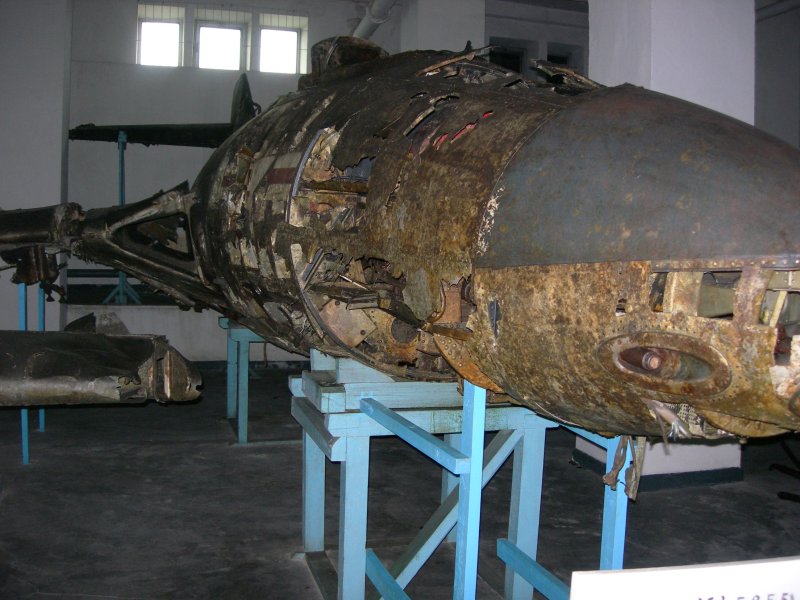
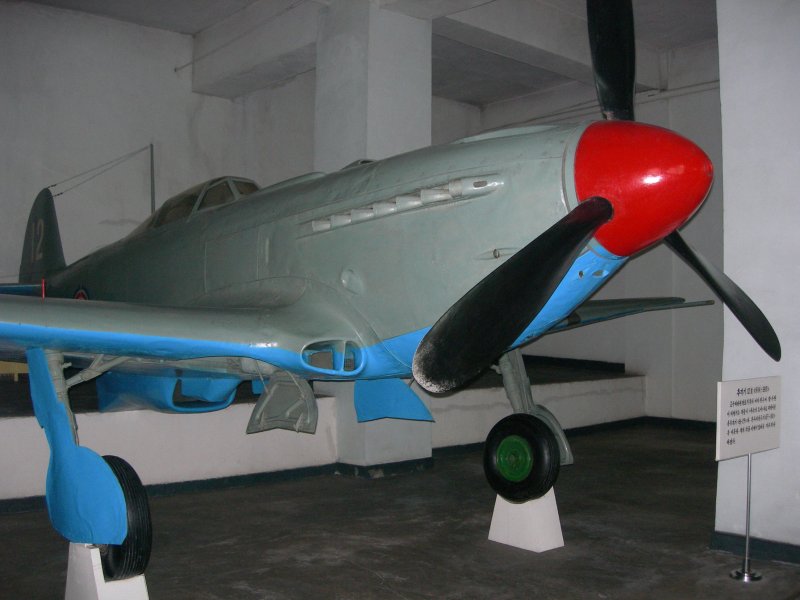
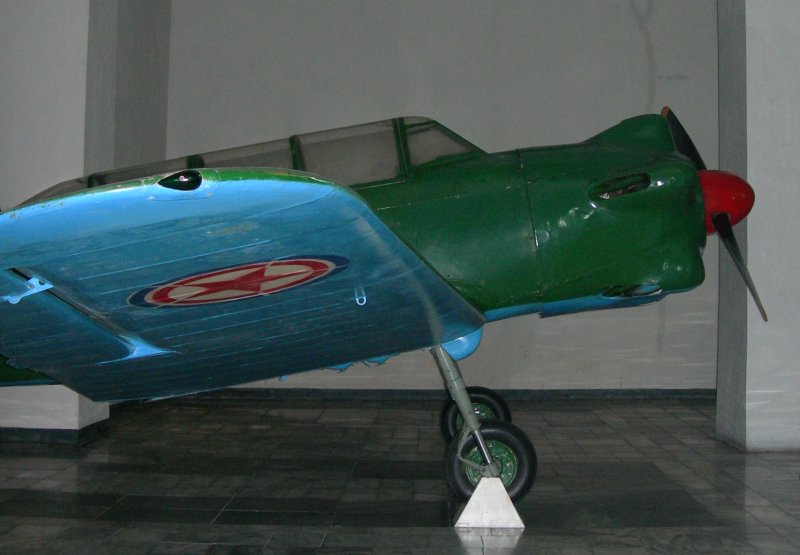
We move downstairs and my eyes light up. Here is the graveyard of American war machinery, shot down, captured, left behind. There are also pieces of North Korean war machinery, including a Yak-18 and a MiG-15. Yet here we are rushed even faster. But while we try to take pictures, they rush us off, up several flights of stairs, round and round, and into... a revolving diorama? We sit on padded benches, slowly turning to see the display along the wall. Here, more than anywhere, we are bombarded with the “U.S. Imperialist Aggressors” phrase, and while this is certainly not the trip for the uninformed or gullible, it is interesting to hear the “other side” right from their own mouths.

As we spin, the diorama slowly moves by amid the creaking and groaning of our turntable seats. A Korean soldier steps on a U.S. flag, North Korean soldiers are flashing bright smiles on their pudgy Kim Il Sung faces, while shifty looking U.S. soldiers lurk in the bushes, their dark eyes glaring, and we spin and spin on the propaganda-go-round.